
By Digital Happiness | digitalhappiness.in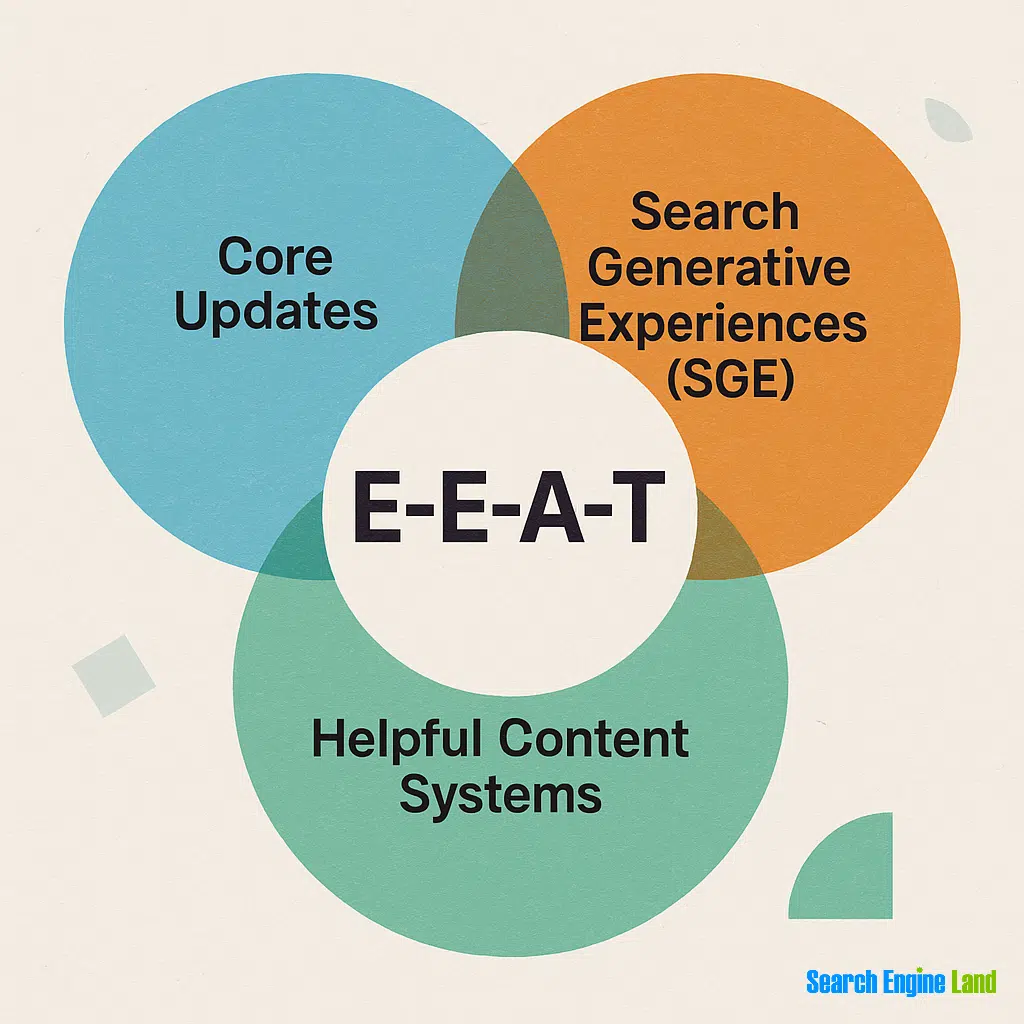
If you’ve been working on SEO for more than a few months, you’ve likely heard the term E-E-A-T SEO thrown around. But what does it actually mean and more importantly, how do you use it to improve your rankings?
This guide breaks down everything you need to know about Google E-E-A-T, why it matters more than ever in 2025, and the exact steps you can take to build the kind of trust and authority that Google rewards with higher rankings.
What Is-E-E-A-T SEO? (And Why the Extra “E” Matters)
E-E-A-T stands for Experience, Expertise, Authoritativeness, and Trustworthiness. It is the framework that Google’s Search Quality Raters use to evaluate whether a piece of content and the website publishing it
Here’s what each pillar means in plain terms:
- Experience-Has the author actually done the thing they’re writing about? A product review from someone who bought and used the product carries more weight than one written from a spec sheet.
- Expertise -Does the author have deep knowledge of the subject? This can come from formal credentials (degrees, certifications) or demonstrated skill over time.
- Authoritativeness– Is the website and its authors recognized as reliable sources within their niche? Do reputable third parties link to or mention them?
- Trustworthiness -Is the site honest, transparent, accurate, and secure? According to Google’s own documentation, trust is the most important of the four pillars the others exist to support it.
Why E-E-A-T SEO Is More Critical Than Ever in 2025
The SEO landscape in 2025 is fundamentally different from what it was just three years ago. Several forces have converged to make Google E-E-A-T the centrepiece of modern search strategy.
1. AI Content Has Flooded the Web
With millions of AI-generated articles being published daily, Google has sharpened its ability to detect content that lacks genuine human insight. To be clear Google does not penalize AI content outright. What it penalizes is low-quality content that fails to demonstrate real experience, accurate expertise, or clear accountability.The December 2025 Core Update specifically targeted generic content farms sites that published lightly edited AI output with no original perspective or credible authorship. If you’re using AI tools, they should be a starting point, not the final product.
2. Google’s Algorithm Has Evolved
Multiple major updates in 2025- including the March Core Update, June Core Update, and August Spam Update sent a consistent message: helpful, experience-based, trustworthy content wins. Everything else slowly disappears from page one.
3. YMYL Standards Are Getting Stricter
Your Money or Your Life (YMYL) topics -content covering health, finance, legal matters, and safety are held to the highest E-E-A-T standards. In September 2025, Google expanded YMYL to explicitly include elections, civic institutions, and government trust. If your content touches any of these areas, vague authorship or unverified claims are simply not acceptable.
4. AI Overviews Are the New First Gate
Google’s AI Overviews have become the first filter for visibility. If Google’s AI doesn’t trust your expertise, your content rarely surfaces at the top even if your technical SEO is otherwise solid.
Breaking Down the Four Pillars of -E-E-A-T SEO
Pillar 1: Experience -Show You’ve Done the Work
Experience is about first-hand involvement. It’s what separates a car review from someone who drove the vehicle for six months versus someone who summarised the manufacturer’s brochure.
How to demonstrate Experience:
- Write case studies from real client work, including specific results and lessons learned
- Use original screenshots, photos, and videos rather than stock imagery
- Include first-person narratives When we ran this campaign for a client in Chandigarh, here’s what happened
- Share before/after comparisons with authentic data
- Reference specific tools, platforms, or environments you’ve personally worked in
Pillar 2: Expertise – Prove Your Knowledge Runs Deep
Expertise is about demonstrating professional-level understanding of your subject. It doesn’t always require a formal degree in many fields, demonstrated skill and consistent output over time is sufficient.
How to demonstrate Expertise:
- Add detailed, verified author bios to every blog post include credentials, years of experience, and links to LinkedIn profiles
- Publish in-depth content that comprehensively answers user questions (not just surface-level overviews)
- Back up claims with credible external datalink out to Search Engine Land, Google’s Search Central, or peer-reviewed sources
- Build topical clusters: if you cover SEO, cover it deeply across keyword research, technical SEO, link building, local SEO, and so on
- Have subject matter experts review or contribute to content
Pillar 3: Authoritativeness -Earn Your Reputation
Authority isn’t something you claim on your own website it’s something the internet grants you. It’s built through recognition from peers, backlinks from credible sources, mentions in industry publications, and a consistent track record of quality.
How to build SEO authority:
- Earn backlinks from high-authority, topically relevant websites not link farms
- Get your team members quoted or featured in industry publications and podcasts
- Publish original research, surveys, or data that others in your industry want to reference
- Build out a robust About page that clearly establishes your agency’s history, expertise, and team
- Consistent publishing in one focused niche builds topical authority faster than scattered content across multiple topics
As E-E-A-T guide explains, E-E-A-T helps websites rank across the full search landscape from Google Search to AI platforms like ChatGPT and Perplexity, which also priorities content from authoritative, trustworthy sources.
Pillar 4: Trustworthiness- The Foundation Everything Else Rests On
Google is explicit: trust is the most important element of E-E-A-T. Without it, strong experience and expertise still won’t be enough.
Key trust signals for SEO:
Technical Trust:
- Secure your entire website with HTTPS
- Maintain fast loading speeds and mobile responsiveness
- Implement structured data (Schema markup)- particularly Author schema, Organization schema, and Review schema
- Fix broken links and remove outdated or factually incorrect content
On-Site Transparency:
- Publish a comprehensive About page with team photos and bios
- Make contact information easy to find (phone, email, physical address)
- Include clear privacy policy, terms of service, and disclosure pages
- Add publication and last-updated dates to all content
Social Proof & Reviews:
- Actively collect and respond to Google Business Profile reviews
- Showcase client testimonials with real names and companies
- A thoughtful response to a negative review can build mor trust than a dozen five-star ratings it signals accountability
E-E-A-T SEO and YMYL: Why Some Industries Need to Try Harder
If your business operates in a YMYL category think financial services, healthcare, legal, or even digital marketing advice that influences someone’s business decisions Google scrutinizes your E-E-A-T signals far more aggressively.
For these topics:
- Every content page should be written or reviewed by a named expert with verifiable credentials
- Anonymous content is treated as a potential trust issue
- Run a full content audit to identify any pages with missing author credits, outdated stats, or thin coverage these become your remediation priority
How Long Does It Take to See Results from E-E-A-T SEO Improvements?
E-E-A-T is not a quick-win tactic. Most sites see meaningful ranking improvements within 3 to 6 months of making consistent improvements. Some authority-building signals like earning editorial backlinks or building a recognized brand can take 12 months or more to fully register.
That said, some changes have faster impact:
- Adding author schema and detailed author bios
- Correcting factual errors in existing content
- Adding HTTPS if you haven’t already
- Refreshing outdated statistics with current data
The key is to treat E-E-A-T as an operational commitment, not a one-time SEO task.
Your-E-E-A-T SEO Action Checklist
Use this checklist to audit your website right now:
Experience
- Do blog posts include first-hand examples, case studies, or personal insights?
- Are original images, screenshots, or videos used instead of generic stock?
- Does content reflect real-world scenarios from your actual work?
Expertise
- Does every blog post have a named author with a detailed bio?
- Are claims backed by data from credible external sources?
- Is content organized into clear topical clusters within your niche?
Authoritativeness
- Is the site earning backlinks from relevant, reputable websites?
- Have team members been featured or quoted in external publications?
- Is original research or data published that others want to cite?
Trustworthiness
- Is the site secured with HTTPS?
- Are contact details, About page, privacy policy, and terms easily accessible?
- Are client reviews actively being collected and responded to?
- Is structured data (Schema markup) implemented correctly?
- Is all content accurate, up-to-date, and free of factual errors?
Common E-E-A-T SEO Mistakes to Avoid
1. Anonymous content– Publishing blog posts with no author name or bio is one of the fastest ways to signal low trust to Google.
2. Outdated statistics– Simply changing 2024 to 2025 in a headline does not constitute a proper content refresh. Update the actual data, examples, and insights.
3. AI content without human oversight -Using AI to draft content is fine. Publishing it without expert review, original perspective, and proper attribution is what gets sites penalized.
4. Missing technical trust signals -No HTTPS, no About page, no contact information. These are basic signals that even small websites must have in place.
5. Chasing backlinks from irrelevant sources– Authority comes from relevant, high-quality links- not volume from link farms or unrelated directories.
E-E-A-T Is Google’s North Star -Make It Yours Too
Here’s the honest truth: E-E-A-T SEO is not a shortcut or a technical trick. It is Google’s way of asking a very simple question -Does this website deserve to rank?
The sites that answer yes most convincingly are the ones that have put in the real work: building genuine expertise, writing from authentic experience, earning recognition from their industry, and maintaining a transparent, trustworthy digital presence.
For businesses and digital marketers in India and beyond, this shift is actually good news. It levels the playing field away from big-budget link schemes and toward something every agency can build: real credibility, real results, and real trust.
If you’d like to know how your website currently stacks up on E-E-A-T, get in touch with the Digital Happiness team- we’ll audit your content and help you build an SEO strategy that earns long-term visibility.
Further Reading & Resources
- Google Search Central: Creating Helpful, Reliable, People-First Content
Published by Digital Happiness -Your trusted digital marketing partner in India. Last updated: April 2025