On-Page SEO Checklist: 15 Must-Do Optimizations for 2026 | Digital Happiness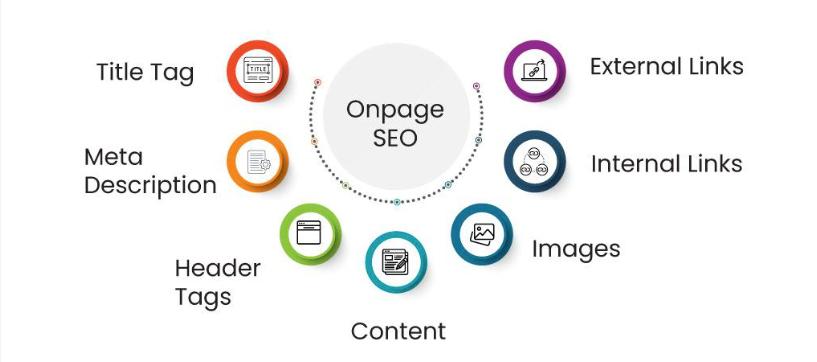
This is not a recycled checklist from 2022. Every item on this on-page SEO checklist has been validated against Google’s current ranking systems, Core Web Vitals updates, and the rise of AI-powered search all of which fundamentally changed what optimized means in 2026.If you run a business website and want to rank on Google or get cited in AI Overviews, ChatGPT, or Perplexity on-page SEO is where it all begins. Before backlinks. Before authority. Before anything else, your pages need to be correctly optimized.
At Digital Happiness, our SEO services are built on this exact foundation. In this guide, we give you the complete on-page SEO checklist 15 must-do optimizations that cover content, technical SEO basics, structure, and AI readiness for 2026.
- 27.6% of all clicks go to the #1 organic result
- 58% higher CTR for pages using rich results/ schema
- 77% more backlinks earned by pages with 3,000+ words
Content & Keyword Optimisations-On-Page SEO
The biggest mistake businesses make is publishing content without a structured on-page framework. These first five items form the bedrock of any high-performing page.
01:Optimize Your Title Tag -The Single Most Important On-Page Element
Your title tag tells Google and your reader exactly what your page covers. Include your primary keyword within the first 60 characters. Google bolds matching terms in search results, so front-loading your keyword increases click-through rate directly. One clean, human-readable title with the keyword placed naturally is all you need. Repeating it looks spammy and can trigger a spam signal.According to Search Engine Land, the title tag remains the highest-weighted on-page signal Google evaluates for content relevance in 2026, that hasn’t changed.
02:Write a Meta Description That Earns the Click
Meta descriptions don’t directly affect rankings but they do affect click-through rate (CTR), which is a behavioral signal that influences rankings indirectly. Keep yours under 155–160 characters. Front-load the most important information: what the page covers and why it’s worth clicking. Include a soft CTA like Learn exactly how or Get the full checklist below. Specificity outperforms vague descriptions every time.
03:Use One H1 Tag and Make It Count
Every page should have exactly one H1 tag that includes your primary keyword. Google treats it as the most authoritative on-page signal of what the page is about. Using multiple H1 tags dilutes this signal. Your H1 doesn’t have to be identical to the title tag use the flexibility to be more descriptive or creative for the reader but it must contain your target keyword. Then use H2 and H3 tags to logically structure subtopics, which also helps you rank for featured snippets.
04:Place Keywords Naturally Intent First, Keyword Second
Incorporate your target keyword and semantically related terms naturally throughout your content. Placement matters as much as frequency. The body text directly beneath each subheading should answer the question that heading asks using the exact terms that define it. A keyword density of 1–2% is a reasonable guide, but never force it. In 2026, Google’s systems understand synonyms, context, and intent far better than any keyword counter.The Search Engine Journal consistently emphasizes that topical depth covering a subject comprehensively now outranks thin content stuffed with exact-match phrases
05: Write Content That Fully Satisfies Search Intent
This is the 1 on-page factor in 2026. Query satisfaction does your content directly and completely fulfil what the user was looking for outranks almost every other signal when it comes to durable ranking performance. Before writing, analyze the top 10 results for your keyword. What format do they use (list, guide, tool, comparison)? What questions do they answer? Your page needs to match and ideally surpass that standard. Content depth and completeness consistently outperform shorter, shallower pages in competitive SERPs.
Technical On-Page SEO Foundations-On-Page SEO
Even flawless content can underperform if the technical foundations underneath it are cracked. These technical SEO basics are non-negotiable in 2026.
06: Optimize Your URL Slug Short, Descriptive, Keyword-Inclusive
Your URL slug is a confirmed ranking signal and a readability signal. Keep it short, descriptive, and hyphenated. Use your primary keyword naturally. Avoid dates, random strings, numbers, or filler words. on-page-Seo-checklist is better than on-page-seo-checklist-must-do-optimizations-2026-complete-guide. If you ever change a URL, always set up a 301 redirect from the old URL to the new one this preserves your ranking authority and prevents broken links.
07:Optimize Images: File Names, Alt Text, and Compression
Every image on your site should have a descriptive file name (not “IMG_4821.jpg”) and keyword-informed alt text that describes what the image shows. Alt text supports accessibility for visually impaired users and gives Google additional contextual signals about your page. Beyond that, compress all images to reduce file size without visible quality loss this directly improves page load speed, which affects both Core Web Vitals scores and user experience.
08:Core Web Vitals: LCP, INP, and CLS Must Pass
Core Web Vitals are a confirmed Google ranking factor. In 2026, the three metrics that matter are LCP (Largest Concertful Paint how fast your main content loads), INP (Interaction to Next Paint how responsive your page feels), and CLS (Cumulative Layout Shift visual stability). First Input Delay (FID) is now a legacy metric. Sites that pass all three have a measurable ranking advantage when competing against pages with similar content and authority.Check your scores using Google Page Speed Insights and the Core Web Vitals report in Google Search Console field data reflects actual user experiences, not just lab simulations.
09: HTTPS Is Non-Negotiable Secure Every Page
Google explicitly considers HTTPS a ranking signal. Every page must load over HTTPS. If you still have HTTP pages, set up 301 redirects to their HTTPS equivalents immediately. Ensure your SSL certificate is valid, not expired, and that all internal links, canonical tags, and sitemap URLs reference the HTTPS version. An insecure site loses trust with both Google and users before they’ve read a single word. This is a baseline technical SEO requirement, not an advanced tactic.
10: Mobile-First Optimization Google Indexes Mobile First
Google uses the mobile version of your pages as the primary basis for indexing and ranking not desktop. This means your mobile experience is your SEO experience. Use responsive design so your layout adapts to any screen size. Ensure font sizes are readable without zooming, tap targets are large enough (minimum 48px), and your page loads cleanly on 4G connections. Test every page in Google Search Console’s Mobile Usability report and fix any flagged issues.
2026 Update AI Search Readiness
In 2026, your pages are being crawled by both Google and AI search agents like ChatGPT (OAI-Search Bot), Perplexity, and Google’s own Gemini. The same on-page clarity that helps Google rank you structured headings, concise answers, schema markup directly improves your chances of being cited in AI-generated responses. The BLUF principle (Bottom Line Up Front) is particularly important: answer the main question in the first paragraph, then expand. AI tools extract top-of-page answers first.
Internal Linking, Schema & E-E-A-T-On-Page SEO
11:Build a Strong Internal Linking Structure
Internal links are how Google discovers your pages, understands their relationships, and distributes authority across your site. Every page should link to at least 2–3 related pages on your site, and those pages should link back to it. Use descriptive, keyword-informed anchor text not “click here” that signals the topic of the destination page. Internal linking also keeps readers engaged longer, reducing bounce rate, which is another positive signal. Build topic clusters: a pillar page supported by related subtopic articles all linking to each other.
12:Add Schema Markup Especially FAQ and Article Schema
Schema markup won’t directly improve your rankings Google’s John Mueller confirmed this in April 2025 but the click-through rate benefits are massive. Research shows rich results achieve a 58% CTR compared to 41% for standard results. FAQ schema performs even better: 87% CTR in some studies. A controlled test showed CTR increased from 1.02% to 2.22% after implementing FAQ schema a 117% improvement. In 2026, schema also helps AI systems understand the specific meaning behind your content for citation purposes.Validate your markup with Google’s Rich Results Test. The most impactful types: Article, FAQ, HowTo, LocalBusiness, and Product.
13:Establish E-E-A-T Signals Experience, Expertise, Authoritativeness, Trust
E-E-A-T is Google’s quality framework and in 2026, it’s more important than ever, especially in competitive niches. Add author bios with credentials, link to authoritative external sources , display trust signals like client results, awards, and testimonials, and use Organisation schema to connect your site to your verified brand entity on LinkedIn, Google Business Profile, and Crunchbase.
14:Refresh Content Regularly Freshness Is a Ranking Signal
Google’s Query Deserves Freshness (QDF) algorithm rewards updated content, particularly for time-sensitive topics. Regularly revisiting and updating your best-performing pages adding new data, refreshing examples, removing outdated information signals ongoing relevance to Google. Even minor updates that add genuine value can trigger a re-crawl and boost rankings. Add a Last Updated” date to your articles (and actually update them Google can tell if the content hasn’t changed). According to Search Engine Journal, content freshness is especially critical for SEO, finance, health, and news-adjacent topics.
15:Add Strategic Outbound Links to Authoritative Sources
Many businesses fear that linking out to other sites leaks authority. The data says the opposite. A controlled SEO experiment by consultant Shai Aharony cited across the found that pages with external links to authoritative sources ranked higher than identical pages without them. Outbound links to trusted, relevant sources signal to Google that your content is well-researched and credible. Link to studies, original research, government sites, and industry publications. It builds trust and trust is a ranking ingredient in 2026.On-page SEO in 2026 is not about tricks. It’s about making your content so clear, so complete, and so well-structured that both Google and AI systems have no choice but to surface it. Digital Happiness SEO Team
Your On-Page SEO Checklist at a Glance-On-Page SEO
Use this table as a quick-reference audit sheet when reviewing any page on your website.
| # | Optimisation | Impact | Difficulty |
|---|---|---|---|
| 01 | Title tag with keyword in first 60 chars | High | Easy |
| 02 | Meta description under 155 characters with CTA | Medium | Easy |
| 03 | Single H1 tag containing primary keyword | High | Easy |
| 04 | Natural keyword placement throughout content | High | Medium |
| 05 | Content that fully satisfies search intent | High | Hard |
| 06 | Clean, keyword-inclusive URL slug | Medium | Easy |
| 07 | Descriptive alt text + compressed images | Medium | Easy |
| 08 | Core Web Vitals: LCP, INP, CLS passing | High | Hard |
| 09 | HTTPS on every page with valid SSL | High | Easy |
| 10 | Mobile-first responsive design | High | Medium |
| 11 | Internal linking with descriptive anchor text | High | Medium |
| 12 | Schema markup (FAQ, Article, LocalBusiness) | Medium | Medium |
| 13 | E-E-A-T: author bios, trust signals, citations | High | Medium |
| 14 | Content freshness quarterly updates | Medium | Easy |
| 15 | Strategic outbound links to authority sources | Trust | Easy |
Need Help Implementing This Checklist?
Our team at Digital Happiness audits, optimises, and manages on-page SEO for businesses across India and internationally. Let’s build a strategy that ranks.Get a Free SEO Audit →
Want your pages fully optimised by experts?Book a Free SEO Audit →
© 2026 Digital Happiness · Full-Service SEO & Digital Marketing Agency ·