
If your website isn’t appearing on the first page of Google, there’s a good chance that a few common SEO mistakes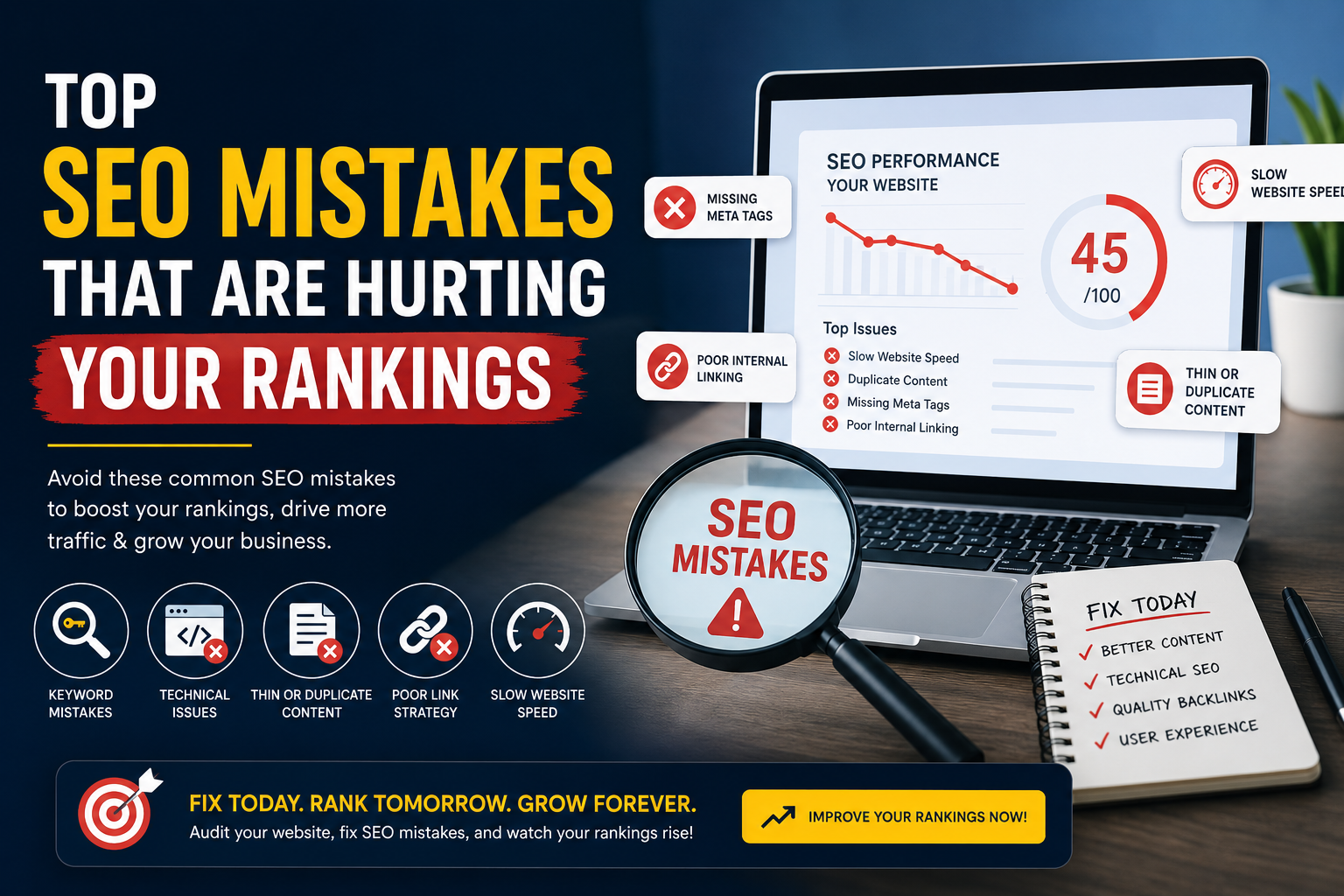
Many businesses invest in content and design, but overlook the search engine optimization issues that quietly damage rankings. From poor keyword targeting to technical problems, these mistakes can prevent your website from attracting the traffic and leads it deserves.
In this guide, we’ll explore the most common SEO mistakes, explain why they matter, and show you how to fix them to improve your visibility in search results.
Why SEO Mistakes Matter
Search engines like Google use hundreds of ranking signals to determine which pages deserve top positions. Even small SEO errors can affect your:
- Organic traffic
- Keyword rankings
- User experience
- Conversion rates
- Lead generation
Avoiding these SEO mistakes can help your business gain a competitive edge and generate consistent traffic over time.
1. Ignoring Keyword Research
One of the biggest SEO mistakes is creating content without understanding what your audience is searching for.
Why It Hurts Rankings
If you target keywords no one searches for-or keywords that are too competitive-your content may never rank.
How to Fix It
Use tools like:
- Google Keyword Planner
- Ahrefs
- SEMrush
Focus on relevant, high-intent keywords with realistic competition levels.
2. Keyword Stuffing
Repeating your target keyword unnaturally is one of the most outdated SEO mistakes.
Example of Keyword Stuffing
“SEO mistakes are common SEO mistakes that cause SEO mistakes in rankings.”
How to Fix It
Use your primary keyword naturally in:
- Title tag
- Meta description
- Headings
- First 100 words
- Image alt text
Then write for users, not search engines.
3. Missing Title Tags and Meta Descriptions
Your title tag and meta description are crucial for both SEO and click-through rates.
Why This SEO Mistake Matters
Without optimized metadata, search engines and users may not understand your page.
Best Practice
Include your keyword, keep the title compelling, and write a concise meta description that encourages clicks.
4. Publishing Thin Content
Thin content provides little value and is one of the most damaging SEO mistakes.
Signs of Thin Content
- Less than 300 words
- No original insights
- Poor formatting
- Duplicate information
How to Fix It
Create in-depth, well-structured content that fully answers user intent.
5. Duplicate Content
Using the same content across multiple pages can confuse search engines.
How to Fix It
- Rewrite duplicate sections
- Use canonical tags
- Consolidate overlapping pages
Google explains canonicalization in its Search Central documentation.
6. Slow Website Speed
Page speed affects both user experience and rankings.
Why It Hurts SEO
Visitors leave quickly when pages take too long to load, increasing bounce rates.
How to Fix It
- Compress images
- Enable caching
- Minify CSS and JavaScript
- Use a CDN
Test your site with PageSpeed Insights.
7. Not Mobile-Friendly
Google uses mobile-first indexing, which means your mobile site is the primary version used for ranking.
How to Fix It
Ensure your website:
- Loads quickly on phones
- Uses responsive design
- Has readable text and tappable buttons
8. Broken Links and Crawl Errors
Broken pages create a poor user experience and waste crawl budget.
How to Fix It
Regularly check:
- 404 errors
- Redirect loops
- Broken internal links
Use Google Search Console to monitor issues.
9. Poor Internal Linking
Internal links help search engines understand your site structure and distribute authority.
How to Fix It
Link relevant pages together using descriptive anchor text. For example, if you’re exploring SEO services, visit Digital Happiness Agency’s SEO Services.
10. Ignoring Image Optimization
Large images slow down your site, and missing alt text reduces accessibility and relevance.
How to Fix It
- Compress images
- Use descriptive file names
- Add keyword-rich alt text where relevant
11. Neglecting Technical SEO
Technical issues can prevent your pages from being crawled and indexed.
Common Technical SEO Mistakes
- Blocked pages in robots.txt
- Missing XML sitemap
- Incorrect canonical tags
- HTTPS issues
12. Not Tracking SEO Performance
Without data, you can’t identify what’s working.
Track Metrics Such As
- Organic traffic
- Keyword rankings
- Conversion rate
- Bounce rate
Use Google Analytics and Search Console.
13. Ignoring Search Intent
Ranking depends on matching what users actually want.
How to Fix It
Before writing, analyze the top-ranking pages to understand whether searchers want:
- Guides
- Service pages
- Product comparisons
- Local results
14. Weak or Missing Calls-to-Action
SEO traffic is valuable only if it converts.
How to Fix It
Include clear CTAs such as:
- Request a consultation
- Get a free audit
- Contact our team
15. Expecting Overnight Results
SEO is a long-term strategy. It typically takes several months to see meaningful growth.
How to Fix It
Focus on consistency, technical improvements, and high-quality content.
Frequently Asked Questions (FAQs) About SEO Mistakes
1. What are the most common SEO mistakes?
The most common SEO mistakes include poor keyword research, keyword stuffing, duplicate content, slow website speed, missing meta tags, broken links, and neglecting technical SEO. These issues can significantly reduce your visibility on search engines.
2. How do SEO mistakes affect Google rankings?
SEO mistakes make it harder for search engines to crawl, understand, and rank your website. They can lead to lower rankings, reduced organic traffic, and fewer leads.
3. Can fixing SEO mistakes improve rankings?
Yes. Correcting SEO mistakes such as optimizing content, improving page speed, and fixing technical issues can lead to better rankings and increased organic traffic over time.
4. How often should I audit my website for SEO mistakes?
You should perform a comprehensive SEO audit at least once every 3 to 6 months. High-traffic or frequently updated websites may benefit from monthly audits.
5. Is keyword stuffing still an SEO mistake in 2026?
Absolutely. Keyword stuffing is one of the most harmful SEO mistakes and can negatively impact both rankings and user experience. Use keywords naturally and strategically.
6. What tools can help identify SEO mistakes?
Popular tools include:
- Google Search Console
- Google Analytics
- Ahrefs
- SEMrush
- Screaming Frog SEO Spider
7. How long does it take to recover from SEO mistakes?
Depending on the severity of the issue, improvements may be visible within a few weeks, while more competitive keywords and larger websites may take several months to recover.
8. Should I hire an SEO agency to fix SEO mistakes?
If you lack the time or technical expertise, working with an experienced agency like Digital Happiness Agency can help you identify and resolve SEO mistakes efficiently and improve your search performance.
9. What is the biggest technical SEO mistake?
One of the biggest technical SEO mistakes is blocking important pages from being crawled or indexed due to robots.txt errors, noindex tags, or incorrect canonical tags.
10. Why is duplicate content considered an SEO mistake?
Duplicate content can confuse search engines about which page to rank, diluting your authority and reducing your chances of ranking well.
Final Thoughts: Avoid SEO Mistakes to Improve Rankings
Most ranking issues are caused by preventable SEO mistakes. By correcting these problems, you can improve visibility, attract qualified traffic, and generate more leads.
Whether it’s poor keyword research, slow page speed, or technical errors, fixing these issues can significantly improve your search performance.
Ready to Fix the SEO Mistakes Hurting Your Website?
At Digital Happiness Agency, we help businesses uncover hidden SEO issues and implement result-driven strategies that increase rankings and leads.
Our SEO Services Include:
- Comprehensive SEO audits
- Keyword research
- On-page optimization
- Technical SEO
- Content strategy
- Link building
Get in touch today for a customized SEO strategy that helps your business rank higher on Google and grow faster.