
Running an online store is exciting, but getting consistent traffic and sales can be challenging. Paid ads can generate quick results, but they stop working the moment your budget runs out. That’s where e-commerce SEO becomes a game changer. 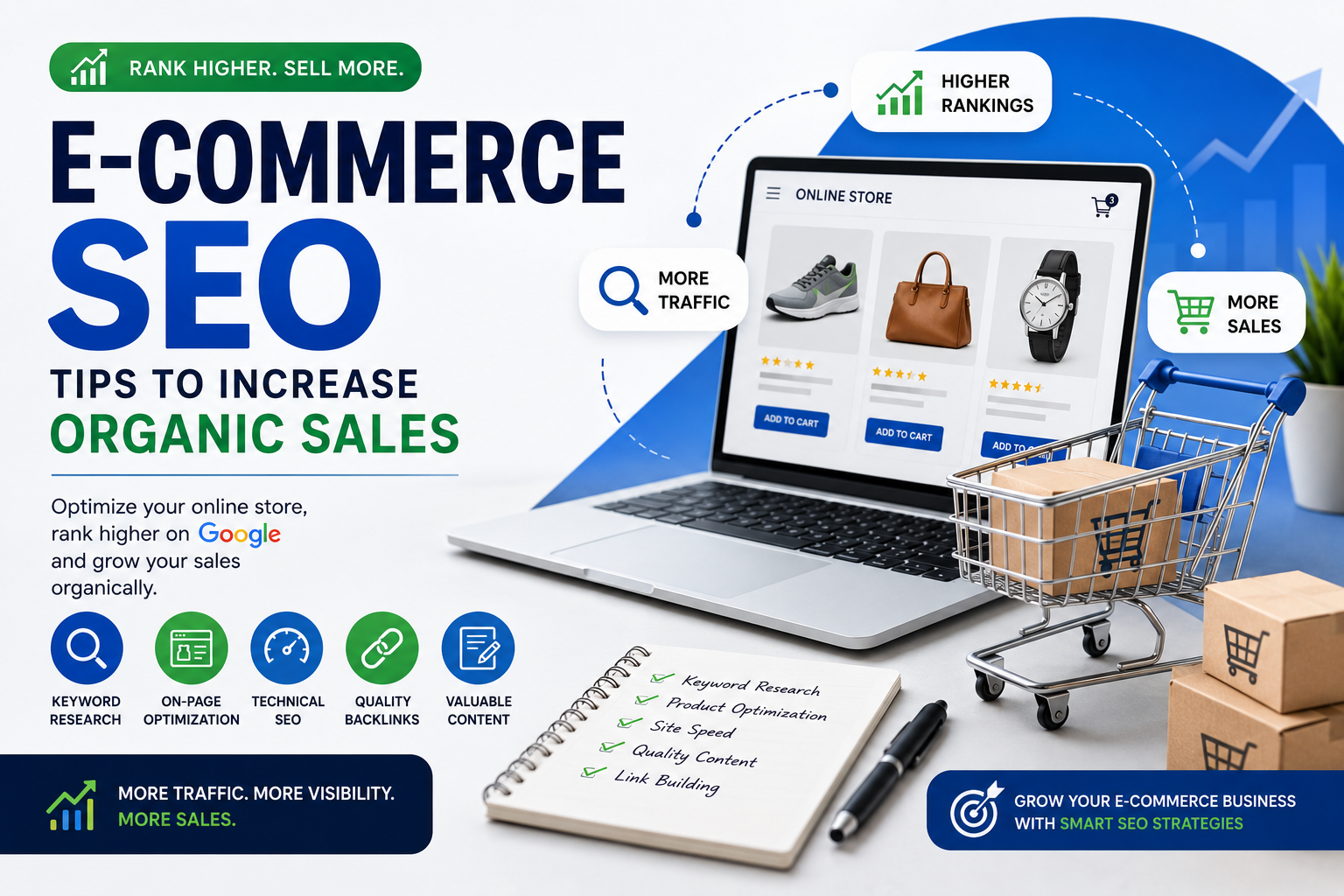
By optimizing your online store for search engines, you can attract qualified visitors who are actively searching for your products. Better rankings lead to more organic traffic, higher conversions, and sustainable revenue growth.
In this guide, the experts at Digital Happiness Agency share proven e-commerce SEO tips to help your store rank higher and increase organic sales.
What Is E-Commerce SEO?
E-commerce SEO is the process of optimizing your online store so product pages, category pages, and content rank in search engines like Google.
It includes:
- Keyword research
- On-page optimization
- Technical SEO
- Site architecture
- Content marketing
- Link building
The goal is simple: help shoppers discover your products organically when they search online.
Why E-Commerce SEO Matters
Consumers use search engines at every stage of the buying journey. If your products are not visible, your competitors get the sale.
Benefits of E-Commerce SEO
- Increase organic traffic
- Reduce dependence on paid ads
- Improve product visibility
- Attract high-intent buyers
- Boost sales and revenue
- Build long-term brand authority
1. Start with Smart Keyword Research
Keyword research is the foundation of effective e-commerce SEO.
Focus on terms with buying intent, such as:
- buy wireless headphones online
- best running shoes for women
- affordable office chairs
- organic skincare products
Best Tools for Keyword Research
- Google Keyword Planner
- Ahrefs
- SEMrush
Use your primary keyword naturally in titles, descriptions, and headings.
2. Optimize Product Pages for Search and Sales
Your product pages should satisfy both search engines and shoppers.
Product Page SEO Checklist
- Unique product titles
- Detailed descriptions
- High-quality images
- Keyword-rich alt text
- Customer reviews
- FAQs
- Clear calls-to-action
Avoid copying manufacturer descriptions-create original content.
3. Create SEO-Friendly Category Pages
Category pages often rank for broad commercial keywords.
Optimize Category Pages With
- Descriptive introductions
- Optimized titles and meta descriptions
- Internal links to products
- Filter options that don’t create duplicate URLs
4. Improve Site Architecture
A clean structure helps users and search engines navigate your store.
Best Practices
- Keep important pages within three clicks of the homepage
- Use logical categories and subcategories
- Create breadcrumb navigation
- Build strong internal linking
5. Speed Up Your Store
Site speed directly affects rankings and conversions.
Ways to Improve Performance
- Compress images
- Use browser caching
- Minify CSS and JavaScript
- Choose fast hosting
- Use a CDN
Test with PageSpeed Insights.
6. Make Your Store Mobile-Friendly
Most online shopping happens on mobile devices.
Ensure your store has:
- Responsive design
- Fast loading times
- Simple navigation
- Easy checkout
7. Use Structured Data (Schema Markup)
Schema helps search engines display rich results such as:
- Product ratings
- Price
- Availability
- FAQs
This can improve click-through rates and visibility.
8. Optimize Images for SEO
Images play a major role in e-commerce SEO.
Image SEO Tips
- Use descriptive file names
- Add alt text
- Compress images
- Enable lazy loading
9. Prevent Duplicate Content
E-commerce websites often create duplicate URLs through filters and variants.
Solutions
- Canonical tags
- Proper URL handling
- Unique descriptions
Google explains this in its canonical URL guide.
10. Write Content That Supports Product Sales
Blog content can attract top-of-funnel traffic.
Content Ideas
- Buying guides
- Product comparisons
- “Best of” lists
- How-to articles
Example: “How to Choose the Best Office Chair for Back Pain.”
11. Build High-Quality Backlinks
Backlinks remain one of the strongest ranking signals.
Effective Link Building Strategies
- Guest posting
- Digital PR
- Influencer outreach
- Resource pages
12. Collect and Display Customer Reviews
Reviews build trust and create fresh content.
They can also generate star ratings in search results when paired with schema markup.
13. Optimize for Search Intent
Understand what users want before creating pages.
For example:
- “Buy leather wallet online” → Product page
- “Best leather wallets” → Comparison article
- “How to clean a leather wallet” → Blog post
14. Track Performance and Conversions
Monitor your SEO progress using:
- Google Analytics
- Google Search Console
Track:
- Organic traffic
- Revenue
- Conversion rate
- Top-performing pages
15. Keep Content Fresh
Update:
- Product descriptions
- Out-of-stock items
- Prices
- Seasonal content
Fresh content helps maintain rankings and improve user experience.
Common E-Commerce SEO Mistakes to Avoid
- Duplicate product descriptions
- Slow site speed
- Poor internal linking
- Missing schema markup
- Thin category pages
- Ignoring mobile usability
Final Thoughts: Turn Organic Traffic into Revenue
Successful e-commerce SEO is about more than rankings—it’s about connecting your products with customers who are ready to buy.
By optimizing your product pages, improving site performance, and creating valuable content, you can increase visibility and drive sustainable organic sales.
Frequently Asked Questions (FAQs) About E-Commerce SEO
1. What is e-commerce SEO?
E-commerce SEO is the process of optimizing your online store so product pages, category pages, and blog content rank higher in search engines. This helps attract more organic traffic and increase sales without relying solely on paid advertising.
2. How long does e-commerce SEO take to show results?
Most online stores begin seeing improvements within 3 to 6 months, depending on competition, website quality, and the consistency of SEO efforts.
3. Why is e-commerce SEO important?
E-commerce SEO helps your products appear when potential customers search on Google. Higher rankings lead to more targeted traffic, better conversion rates, and increased revenue.
4. What pages should I optimize for e-commerce SEO?
Focus on:
- Product pages
- Category pages
- Homepage
- Blog posts
- FAQ pages
Each page should target relevant keywords and satisfy user intent.
5. What is the best keyword strategy for e-commerce SEO?
Target commercial and transactional keywords such as:
- buy running shoes online
- best skincare products
- affordable office furniture
Use these keywords naturally in titles, descriptions, headings, and image alt text.
6. Does duplicate content hurt e-commerce SEO?
Yes. Duplicate product descriptions and multiple URL versions can confuse search engines and dilute rankings. Use unique content and canonical tags to avoid this issue.
7. How does site speed affect e-commerce SEO?
A fast website improves user experience and conversions while supporting better rankings. Slow pages can increase bounce rates and reduce sales.
8. What is schema markup in e-commerce SEO?
Schema markup is structured data that helps search engines display product information such as price, ratings, and stock availability directly in search results.
9. Can blog content help e-commerce SEO?
Absolutely. Buying guides, comparisons, and how-to articles can attract new visitors and funnel them toward your product pages.
10. Should I hire an agency for e-commerce SEO?
If you want faster results and expert guidance, working with Digital Happiness Agency can help you build a scalable SEO strategy that increases organic traffic and sales.
11. What tools are best for e-commerce SEO?
Useful tools include:
- Google Search Console
- Google Analytics
- Ahrefs
- SEMrush
- PageSpeed Insights
12. How can I increase organic sales with e-commerce SEO?
Optimize product and category pages, improve site speed, build backlinks, create helpful content, and ensure your store provides an excellent user experience. Over time, these improvements can drive more qualified traffic and higher sales.
Ready to Grow Your E-Commerce Store?
At Digital Happiness Agency, we help e-commerce brands increase traffic, improve rankings, and generate more revenue with data-driven SEO strategies.
Our E-Commerce SEO Services Include:
- Keyword research
- Technical SEO audits
- Product and category page optimization
- Content marketing
- Link building
- Conversion tracking
Contact us today for a customized e-commerce SEO strategy that turns search traffic into sales.