
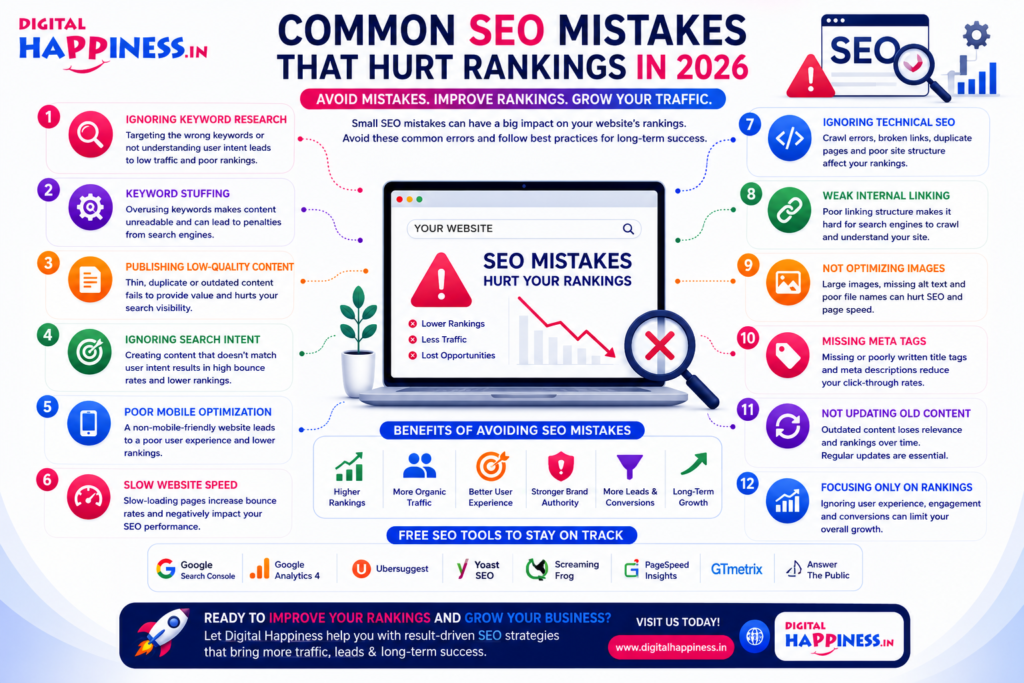
Search Engine Optimization (SEO) is one of the most powerful ways to grow your online presence, increase website traffic, and generate leads. However, many businesses unknowingly make SEO mistakes that prevent their websites from ranking higher on Google.
In 2026, search engine algorithms are smarter than ever. Google now prioritizes user experience, helpful content, page speed, mobile optimization, and search intent. Even small SEO mistakes can negatively impact your rankings and reduce your website traffic.
In this guide, we’ll discuss the most common SEO mistakes that hurt rankings and how to fix them to improve your online visibility.
If you need professional help optimizing your website, explore the expert offered by Digital Happiness.
Why Avoiding SEO Mistakes Matters
SEO mistakes can lead to:
- Lower Google rankings
- Reduced organic traffic
- Poor user experience
- High bounce rates
- Lower conversions
- Lost business opportunities
By identifying and fixing these issues, businesses can improve search visibility and achieve sustainable growth.
Combining SEO best practices with professional can significantly improve online performance.
1. Ignoring Keyword Research
One of the biggest SEO mistakes is targeting the wrong keywords or skipping keyword research entirely.
Why It Hurts Rankings
Without proper keyword research:
- Your content may not match user searches
- You target highly competitive keywords
- You miss valuable long-tail keyword opportunities
How to Fix It
Use keyword research tools to identify:
- Search volume
- Competition level
- User intent
- Related keywords
Focus on keywords relevant to your business and audience.
For example, businesses offering <a href=”https://digitalhappiness.in/”>Local SEO Services</a> should target local search terms with strong buyer intent.
2. Keyword Stuffing
Many beginners believe repeating keywords excessively improves rankings. In reality, keyword stuffing harms SEO.
What Keyword Stuffing Looks Like
Using the same keyword unnaturally multiple times:
- In headings
- Paragraphs
- Meta descriptions
- URLs
Why It’s Bad
Google considers keyword stuffing spammy and may lower your rankings.
Best Practice
Use keywords naturally and focus on readability. Include:
- Primary keywords
- Secondary keywords
- Semantic keywords
- Related phrases
Quality content always performs better than over-optimized content.
3. Publishing Low-Quality Content
Content quality is one of the most important ranking factors in 2026.
Common Low-Quality Content Issues
- Thin content
- Duplicate content
- AI-generated content without editing
- Outdated information
- Poor readability
Why It Hurts SEO
Google prioritizes content that provides real value to users.
How to Improve
Create content that:
- Solves problems
- Answers user questions
- Provides accurate information
- Includes visuals and examples
You can improve engagement further with professional Content Marketing Services
4. Ignoring Search Intent
Search intent refers to the reason behind a user’s search query.
Types of Search Intent
- Informational
- Navigational
- Commercial
- Transactional
Why It Matters
If your content does not match user intent, visitors quickly leave your website.
Example:
Someone searching best SEO agency likely wants service recommendations, not a general SEO tutorial.
Solution
Understand what users expect before creating content.
5. Poor Mobile Optimization
Mobile first indexing is now standard.
Why This Is Important
Most users browse websites using smartphones.
If your website:
- Loads slowly on mobile
- Has poor design
- Is difficult to navigate
Google may lower your rankings.
Best Practices
- Use responsive design
- Optimize mobile speed
- Improve navigation
- Ensure readable text sizes
Businesses investing in should prioritize mobile optimization from the beginning.
6. Slow Website Speed
Page speed directly impacts:
- User experience
- Bounce rate
- Conversion rates
- SEO rankings
Common Causes of Slow Websites
- Large image files
- Poor hosting
- Too many plugins
- Unoptimized code
How to Improve Speed
- Compress images
- Use caching
- Minimize scripts
- Upgrade hosting
Fast-loading websites provide better experiences and rank higher in search results.
7. Missing Meta Titles and Descriptions
Meta titles and descriptions help search engines understand your pages.
SEO Mistakes
- Missing meta tags
- Duplicate meta descriptions
- Keyword stuffing in titles
- Unclear titles
Why They Matter
Good meta tags improve:
- Click-through rates
- Search visibility
- User understanding
Best Practice
Write compelling titles that:
- Include target keywords
- Stay within character limits
- Encourage clicks
8. Weak Internal Linking
Internal linking helps search engines understand website structure.
Why Internal Links Matter
They help:
- Improve page authority
- Increase user engagement
- Boost crawlability
- Guide visitors to related pages
Example of Effective Internal Linking
Link blog posts to relevant service pages such as:
- <a href=”https://digitalhappiness.in/”>SEO Optimization Services</a>
- <a href=”https://digitalhappiness.in/”>Google Ads Services</a>
- <a href=”https://digitalhappiness.in/”>Social Media Marketing Services</a>
9. Not Optimizing Images
Images improve engagement, but unoptimized images can hurt SEO.
Common Image SEO Mistakes
- Large image sizes
- Missing alt text
- Poor file names
- Slow loading visuals
Image Optimization Tips
- Compress image sizes
- Add descriptive alt text
- Use SEO friendly filenames
- Choose modern formats like WebP
Optimized images improve both rankings and accessibility.
10. Ignoring Technical SEO
Technical SEO ensures search engines can crawl and index your site properly.
Common Technical SEO Problems
- Broken links
- Duplicate pages
- Crawl errors
- Missing XML sitemap
- Poor site structure
Why It Matters
Even great content may not rank if technical SEO issues exist.
Solution
Regularly audit your website using SEO tools to identify and fix technical problems.
11. Not Updating Old Content
SEO is not a one time process.
Why Content Updates Matter
Google prefers fresh and updated content.
Outdated content may:
- Lose rankings
- Provide inaccurate information
- Decrease user trust
How to Refresh Content
- Update statistics
- Add new insights
- Improve readability
- Include new keywords
Refreshing old blog posts can significantly improve traffic.
12. Ignoring Local SEO
Many businesses overlook local search optimization.
Why Local SEO Is Important
Local SEO helps businesses appear in:
- Google Maps
- Local search results
- “Near me” searches
Best Practices
- Optimize your Google Business Profile
- Add location-based keywords
- Collect customer reviews
- Maintain consistent business information
Local SEO is especially important for service-based businesses targeting nearby customers.
13. Focusing Only on Rankings
High rankings are valuable, but conversions matter more.
The Real Goal of SEO
SEO should generate:
- Leads
- Sales
- Phone calls
- Business growth
Better SEO Strategy
Focus on:
- User experience
- Content quality
- Conversion optimization
- Engagement metrics
Combining SEO with social media marketing can create stronger results.
Final Thoughts
SEO success in 2026 requires more than just adding keywords to your website. Businesses must focus on high-quality content, technical optimization, user experience, and search intent.
Avoiding common SEO mistakes can help improve:
- Search rankings
- Organic traffic
- Brand authority
- Lead generation
- Long-term business growth
The best SEO strategies are built around helping users while following search engine best practices.
Ready to Improve Your SEO Rankings?
At DIGITAL HAPPINESS, we help businesses grow online with powerful, data-driven SEO strategies that improve rankings and generate real results.
Our Services Include:
- SEO Services
- Local SEO
- Technical SEO
- Google Ads Management
- Social Media Marketing
- Content Marketing
- Website Optimization
🚀 Visit https://digitalhappiness.in/ today and start building a stronger online presence with expert digital marketing solutions!