
Let’s be direct: in 2026, running a business without a coherent, data-driven marketing strategy is no longer a calculated risk – it’s an act of commercial surrender. 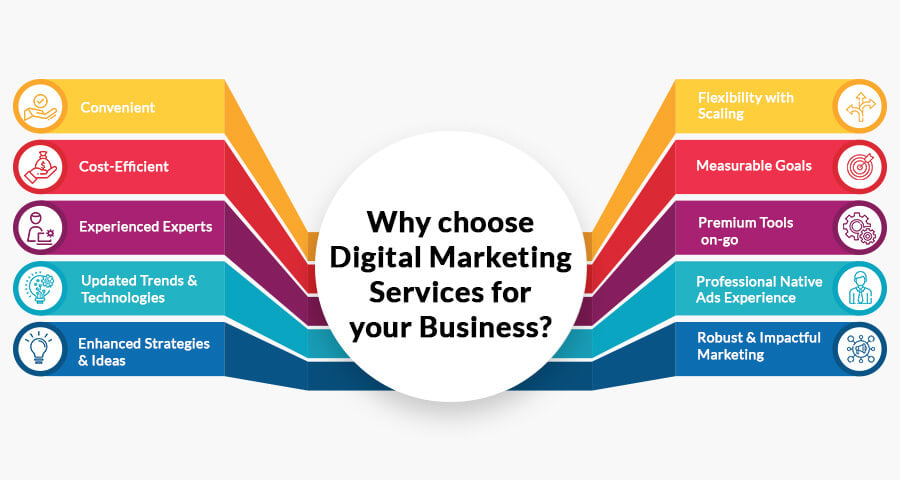
The digital landscape has been fundamentally reshaped by artificial intelligence, the death of third-party cookies, the rise of generative search, and an audience that expects hyper-personalized experiences at every touchpoint. The brands growing fastest right now aren’t doing it by winging it. They’re doing it with the right partners behind them.
A professional marketing agency isn’t a luxury reserved for enterprise budgets anymore. For startups, SMBs, and growth-stage companies alike, it’s become one of the most strategically sound investments a business can make. The question isn’t whether you need one – it’s how to find the right one.
This guide answers both.
The 2026 Marketing Landscape Has Changed Everything
Before we talk about why you need a marketing agency, you need to understand the environment your business is operating in. Because if you’re still planning campaigns the way you were in 2022 or even 2024, your competitors have already left you behind.
Here’s what’s different today:
AI has completely rewritten search. Google’s AI Overviews now answer user queries directly on the results page, resulting in a surge of zero-click searches. Meanwhile, the concept of SEO has evolved into what experts now call Generative Engine Optimization (GEO) – getting your brand mentioned within AI-powered search answers. This requires an entirely new set of skills, tools, and strategies.
Consumer behavior has fragmented. Discovery no longer happens in one place. Consumers expect personalized experiences, faster responses, stronger trust signals, and smoother buying journeys across search engines, social feeds, short videos, and beyond. Your brand needs to show up everywhere – with the right message at the right moment.
Data privacy has transformed targeting. With third-party cookies gone and privacy regulations tightening globally, the playbook for paid advertising has been rewritten. Brands that win are those building first-party data ecosystems. Brands that don’t adapt are burning budget on campaigns that miss.
AI adoption has outpaced expertise. Roughly 65% of companies now use generative AI in at least one business function, yet 57% of marketing leaders say their organizations lack the talent or expertise to use it responsibly. The gap between AI adoption and AI competence is real – and expensive.
65% of companies now use generative AI in marketing
57% of marketing leaders lack the expertise to use AI responsibly
3–10× Revenue growth potential with the right agency partner
This is precisely why the right marketing agency has become indispensable. The complexity has simply exceeded what most internal teams – especially those at growing businesses – can realistically manage alone.
7 Compelling Reasons Your Business Needs a Marketing Agency in 2026
You Get an Entire Team of Specialists – Not Just One Hire
Hiring a full-time SEO specialist, paid ads manager, content strategist, graphic designer, and social media manager individually would cost a business lakhs of rupees per month – assuming you can even find and retain that talent. A quality marketing agency gives you access to all of those competencies under a single retainer, coordinated to work as a unified system. You’re not paying for one person’s skills. You’re leveraging an entire team’s accumulated experience across dozens of clients and industries.
Data-Driven Strategy, Not Guesswork
In 2026, top marketing agencies have moved well beyond simple metrics like clicks and likes. They use advanced analytics to connect marketing activities directly to business outcomes – using predictive analytics to forecast what is likely to happen next, not just what happened yesterday. Without the right tools and expertise to interpret data, most business owners are making expensive guesses. A great marketing agency turns data into decisions.
AI-Powered Execution at Scale
AI has fundamentally changed how modern agencies operate. Google Ads can now bid automatically, AI can produce content drafts, and audience segmentation is increasingly predictive. These tools help agencies get more done while staying true to a brand’s creative spirit. But the real differentiator is knowing how to deploy these tools strategically – not just having access to them. Smart agencies use AI to support strategy, not replace strategists. The technology handles repetitive optimization tasks while human experts focus on creative direction and business alignment.
Faster Results Across Every Channel
Agencies don’t experiment on your dime the way an inexperienced in-house hire might. As a result of working with many clients across various industries, agencies have playbooks and frameworks that have been tried, tested, and proven to deliver results. Whether you need immediate wins through paid advertising or sustainable long-term growth through SEO and content, a good marketing agency knows exactly which levers to pull – and when.
You Stay Ahead of a Rapidly Evolving Industry
Marketing agencies are no longer merely service providers – they are strategic partners in growth, innovation hubs, and digital architects for brands navigating a rapidly evolving world of AI, privacy mandates, and performance accountability. Keeping up with algorithm changes, platform updates, and emerging tools is a full-time job in itself. Your agency does that for you – so you can focus on running your business.
Integrated, Full-Funnel Marketing – Not Siloed Tactics
Modern campaigns require full-funnel execution with truly integrated skills across SEO, PPC, social, email, retargeting, and content – not silos. The interplay between channels, such as linking an SEO content strategy with paid retargeting, is what drives compounding results. Disconnected efforts produce disconnected results. A marketing agency ensures every channel feeds every other channel.
Measurable ROI and Transparent Accountability
Transparency in communication and clear ROI reporting are non-negotiable qualities for a great marketing agency in 2026. You should never have to wonder where your budget went or what it produced. The right agency gives you clear attribution dashboards, regular performance reviews, and honest conversations about what’s working and what needs to be adjusted. You deserve to see the numbers – all of them.
Ready to see what a results-driven marketing agency can do for your brand? Talk to Digital Happiness →
Agency vs. In-House: Settling the 2026 Debate
This question comes up constantly – and the honest answer is: it depends on where your business is right now.
For most startups and growing businesses, agencies offer speed, flexibility, and access to experienced teams without the overhead of full-time hires. In-house teams make more sense for larger companies that need constant internal alignment and have the budget to sustain it.
In practice, many businesses in 2026 don’t choose one or the other. They keep strategy and direction in-house while agencies handle execution and scaling – a balance that often delivers the best results.
The smartest businesses aren’t asking “agency or in-house?” They’re asking “what do we keep internal, and what do we hand to experts?” That’s the right question for 2026.
If you’re a small business or startup, the math is simple: you cannot afford to hire the team of specialists a good agency gives you access to. If you’re a mid-sized company, an agency amplifies your existing team. If you’re enterprise-level, a specialized agency brings capabilities and objectivity that internal teams often can’t replicate.
How to Choose the Right Marketing Agency in 2026
Choosing a marketing agency is one of the most consequential decisions your business will make. The wrong choice costs you time, money, and market share. The right one fundamentally changes your growth trajectory.
Here’s a structured framework to help you get it right:
Step 1: Define Your Goals Before You Talk to Anyone
Before you speak to agencies, define what success means in business terms. The problem is most businesses hire agencies with vague goals – and get vague outcomes. Are you trying to increase qualified leads? Improve brand awareness in a new market? Drive e-commerce conversions. Reduce customer acquisition cost? Get specific. An agency can only deliver what you clearly ask for.
Step 2: Evaluate Their Real-World Track Record
Go beyond surface-level case studies. Ask for detailed performance data, client references, and proof of ROI. Any agency can show you a polished deck with impressive-looking numbers. What you need to see is consistent, repeatable performance in your industry or a closely related one. Ask: “Show me a client who looked like us six months ago. What happened?”
Step 3: Demand Real Data Infrastructure – Not Just Dashboards
In 2026, every agency calls itself data-driven. But this term has lost much of its meaning. A truly data-driven agency uses a sophisticated tech stack to provide unified, accurate, and actionable insights – not just basic platform screenshots. Ask them specifically about their attribution model. Can they prove incrementality? Do they use GA4, advanced CRM syncing, and multi-touch attribution? If the answer is vague, keep looking.
Step 4: Assess Cultural Fit and Communication Style
Choose a partner whose communication style, reporting cadence, and company culture align with your own for a successful long-term relationship. This matters more than most businesses realize. You’re not hiring a vendor – you’re entering a partnership. If the chemistry feels off in the pitch, it will feel worse six months in. Strong cultural fit can cut onboarding time and help you get results faster.
Step 5: Check Their Own Marketing
Check their blog – is it updated? Check their social media – is it active? If an agency cannot market itself effectively, it cannot market you. This is a simple but revealing test. An agency that doesn’t practice what it preaches is a major red flag.
Step 6: Ensure Pricing Transparency and Contract Flexibility
You should not be trapped in a 12-month contract with a partner who doesn’t deliver. A standard agreement should have a 30-day or 60-day out clause. If they demand a year-long lock-in with no escape hatch, they are likely more focused on cash flow than results. Transparency in pricing is equally important. You deserve to know exactly how your budget is allocated – ad spend versus management fees, and everything in between.
Step 7: Ask About Their AI and Technology Strategy
In 2026, your agency should use AI for efficiency – data analysis, content drafting, audience modeling – but human strategy must drive the ship. Ask them about their tech stack. Are they using AI to do more meaningful work, or just to cut corners? The answer to this question separates forward-thinking agencies from those simply chasing trends.
Your Quick-Reference Agency Evaluation Checklist
- Clear track record with verifiable case studies in your industry
- Transparent, granular reporting with real ROI metrics (not just clicks)
- Strong cultural and communication fit with your team
- Full-funnel capabilities: SEO, paid, content, social, email, CRO
- Demonstrated mastery of AI tools paired with human strategic leadership
- Flexible contract terms with a reasonable exit clause
- Clear data governance and privacy compliance approach
- Their own marketing is active, current, and impressive
- Specific answer to: “How do you measure incrementality?”
- They push back when they disagree with your ideas – a sign they care
Red Flags to Watch Out for in a Marketing Agency
Knowing what to look for in a great agency is only half the battle. You also need to know when to walk away. These warning signs should make you pause – or run.
- They guarantee 1 Google rankings – no legitimate agency can promise this
- Vague reporting that shows “impressions” and “reach” but avoids revenue metrics
- You can’t speak directly to the team that will actually work on your account
- No clear understanding of your industry, customer, or competitive landscape
- Cookie-cutter proposals that could have been written for any business
- They ask for 12-month lock-in contracts with no exit clause
- Their own social media and blog haven’t been updated in months
- They have no clear process for handling privacy and first-party data
- They say “trust us” more than they say “here’s the data”
A partner cares about your growth. A vendor just wants to take your money. If an agency says “we’ll figure out the strategy together” before they’ve understood your business – that’s a vendor wearing a partner’s clothes.
Questions to Ask Before You Hire a Digital Marketing Agency
Walk into every agency conversation armed with specific questions. The quality of their answers will tell you everything you need to know.
- Strategy: “If our website traffic dropped 20% overnight, what’s your diagnostic process?”
- Measurement: “Do you use business driver modeling, or do you just report platform ROAS?”
- AI: “Show us how you use AI tools – and what human oversight looks like in your process.”
- Team: “Who specifically will work on our account, and can we meet them before signing?”
- Reporting: “What does our monthly report look like, and how often do we meet to review it?”
- Privacy: “How are you preparing for continued third-party data deprecation?”
- Accountability: “What happens if you miss agreed-upon KPIs in the first 90 days?”
- Retention: “What’s your average client tenure?” (High retention = happy, successful clients)
Digital Happiness answers every one of these questions – with data, transparency, and a track record you can verify. Get a Free Consultation →
Final Word: The Cost of Getting This Wrong
In 2026, your competitors are not standing still. They’re investing in smarter systems, better data, and expert execution. The brands that adapt to these changes will create stronger lead pipelines, better ROI, and more predictable revenue. The businesses that ignore them will keep spending more while getting less.
A great marketing agency doesn’t just run your campaigns – it builds the revenue infrastructure that makes your business more defensible, more scalable, and more profitable over time. You’re not hiring someone to “run marketing.” You’re choosing a partner to help you build the systems, tracking, and execution that turn attention into pipeline – and pipeline into closed-won growth.
The right marketing agency accelerates everything. The wrong one sets you back by months or years. That’s why this decision deserves the weight you’d give to any senior hire – because in many ways, it’s exactly that.
The Bottom Line
Don’t choose an agency based on who has the prettiest deck or the most impressive client list. Choose the one that asks the hardest questions about your business, shows you exactly how they’ll measure success, and treats your growth like their own. The best agency isn’t always the biggest or the most expensive – it’s the one that understands your goals, communicates clearly, and can show progress through real numbers.
Digital Happiness Team Published April 2026 · digitalhappiness.in
Marketing AgencyDigital Marketing 2026AI MarketingSEOBusiness GrowthGEOMarketing Strategy
Ready to Partner with a Marketing Agency That Actually Delivers?
Digital Happiness combines strategy, creativity, and data-driven execution to help your business grow – predictably and profitably. Explore Digital Happiness → No long-term lock-in. No vague promises. Just results.