In today’s highly competitive digital landscape, every business-whether a startup, small business, or enterprise-faces a critical decision: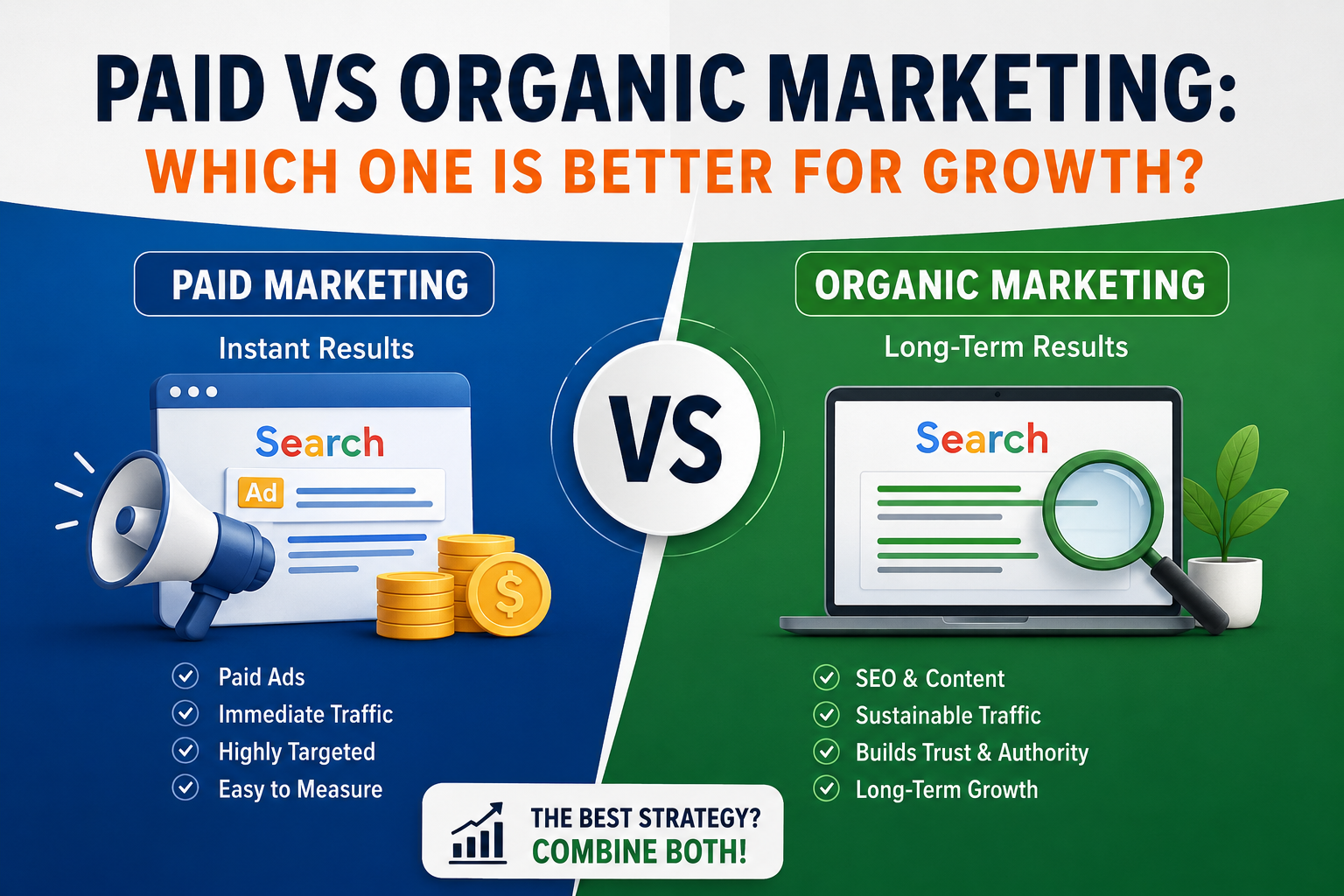
If you’re building your online presence through platforms like Digital Happiness or analyzing competitors such as 2Point Agency, understanding the difference between these two approaches is essential.The truth is not as simple as choosing one over the other.The real growth comes from knowing when, where, and how to use each strategy effectively.
This in-depth guide will help you understand both approaches, compare them, and build a strategy that drives real business growth in 2026 and beyond.
What is Paid vs Organic Marketing?
Paid Marketing Explained
Paid marketing refers to any strategy where businesses pay to promote their products or services online. It allows you to instantly place your brand in front of your target audience.
Popular Paid Channels:
- Google Ads (Search, Display, Shopping)
- Facebook & Instagram Ads
- YouTube Video Ads
- LinkedIn Ads
- Native Advertising
- Programmatic Advertising
- Retargeting Ads (Remarketing)
- Influencer Paid Collaborations
Paid marketing ensures your business appears at the top of search results or user feeds, giving immediate visibility.
Organic Marketing Explained
Organic marketing focuses on attracting users naturally without paid promotions. Instead of buying attention, you earn it through valuable content and optimization.
Popular Organic Channels:
- SEO (Search Engine Optimization)
- Blogging & content marketing
- Organic social media
- Email marketing
- YouTube content
- Influencer collaborations (organic)
- Webinars & live sessions
- Content repurposing
- Case studies & testimonials
- Free tools & resources
Organic marketing builds long-term authority and trust.
Paid vs Organic Marketing: Key Differences
| Factor | Paid Marketing | Organic Marketing |
|---|---|---|
| Cost | Requires budget | Free (time investment) |
| Speed | Instant traffic | Slow growth |
| Sustainability | Stops when budget ends | Long-term results |
| Trust Level | Moderate | High |
| ROI | Short-term | Long-term |
Deep Dive: Benefits of Paid Marketing
1. Instant Visibility-paid marketing
One of the biggest advantages of paid marketing is speed the moment your campaign goes live, your brand appears in front of your target audience.
This is especially useful for:
- New businesses
- Product launches
- Seasonal campaigns
2. Advanced Audience Targeting paid-marketing
Paid ads allow you to target users with precision:
- Demographics (age, gender)
- Location
- Interests
- Online behavior
This ensures your message reaches the right people at the right time.
3. Scalable Campaigns
In simple terms:
When you increase your budget, targeting, or ad reach, your traffic, leads, and sales also grow proportionally.Unlike organic marketing, where growth takes time, paid campaigns allow you to control and accelerate your growth instantly.
How Scaling Works
Once you find a profitable campaign (good conversions, low cost per lead), you can:
- Increase your daily ad budget
- Expand your target audience
- Add more keywords or locations
- Launch similar ad variations
As a result:
More budget → More impressions → More clicks → More conversions
4. Data-Driven Insights
Paid platforms provide detailed analytics:
- Click-through rate (CTR)
- Conversion rate
- Cost per click (CPC)
- Return on ad spend (ROAS)
- Increase brand visibility instantly
- Better control over growth speed
- Ability to pause or reduce spend anytime
- High flexibility in targeting and creatives
- Supports seasonal and trend-based scaling
- Helps dominate competitive keywords
You can continuously optimize campaigns for better performance.
5. Testing & Experimentation
Paid marketing allows A/B testing:
- Ad copies
- Images/videos
- Landing pages
- Analyzing performance data to optimize campaigns
- Identifying high-performing ads quickly
- Eliminating low-performing campaigns
- Testing different bidding strategies
- Experimenting with ad placements
This helps refine your strategy quickly.
Limitations of Paid Marketing
- Requires continuous investment
- Can be expensive in competitive industries
- Traffic stops when ads stop
- Ad fatigue can reduce performance
- Limited trust compared to organic results
- Poor targeting can lead to wasted spend
- Short-term impact without long-term value
- Increasing CPC in competitive niches
- Learning curve for beginners
- Policy restrictions can limit ads
Deep Dive: Benefits of Organic Marketing
1. Long-Term Traffic
Organic marketing builds assets that continue to perform over time.
A blog post or SEO page can generate traffic for years.
2. Cost-Effective Growth
No need to pay per click.Once content ranks, traffic is essentially free.
3. Builds Authority & Trust
Users trust organic results more than ads.High rankings signal credibility and expertise.
4. Sustainable Growth
Organic strategies create consistent traffic over time.
5. Strong Customer Relationships
Organic content educates and nurtures users.Builds long-term engagement and loyalty.
Limitations of Organic Marketing
- Takes time to see results
- Requires consistency
- Needs strong SEO and content strategy
- Competitive in high-demand niches
- Difficult to scale quickly
- Requires strong SEO knowledge
- Time-consuming strategy
- Dependence on search engine rules
- Hard to compete with high-authority websites
- Content may take months to rank
- Requires ongoing optimization
- Limited control over traffic fluctuations
How to Choose Between Paid and Organic Marketing
Choose Paid Marketing If:
- You need immediate results
- You’re launching a new product or service
- You have a flexible marketing budget
- You want quick leads and conversions
- Your organic rankings are low or new website
- You are running time-sensitive campaigns
- You want to promote offers or discounts quickly
- You need measurable and fast ROI
- You want to target a specific audience precisely
Choose Organic Marketing If:
- You want long-term growth
- You aim to build brand authority
- You have limited budget
- You are focused on sustainability
- You want free (organic) website traffic
- You aim to rank on Google search results
- You want to educate and engage
- your audience
- You are building a strong online presence
- You prefer low-cost marketing strategies
- You want evergreen content that lasts long
- You aim to improve website credibility
The Best Approach: Hybrid Strategy Paid Vs Organic
The most successful businesses don’t choose one-they combine both.
Step-by-Step Hybrid Strategy
Step 1: Use Paid Marketing
- Generate instant traffic
- Test audience and messaging
Step 2: Build Organic Marketing
- Create high-quality blog content
- Optimize for SEO
- Build backlinks
Step 3: Retarget Users Of Hybrid Strategy
- Use paid ads to convert organic visitors
This creates a full-funnel growth system.
Real-World Example Paid vs Organic
Let’s say you run a digital marketing agency.
Paid Strategy:
- Run Google Ads for “SEO services near me”
Organic Strategy:
- Publish blogs:
- “How to increase website traffic organically”
- “Best SEO strategies in 2026”
Result:
- Paid ads → Instant leads
- Organic SEO → Long-term traffic
The Role of SEO in Paid Vs Organic
The Role of SEO in Organic Growth
SEO is the foundation of organic marketing.
Key Components:
- Keyword research
- On-page SEO
- Technical SEO
- Link building
Strong SEO ensures consistent, long-term visibility.
The Role of Paid Ads in Growth
Paid ads are powerful for:
- Lead generation
- Brand awareness
- Sales campaigns
Ideal for scaling quickly.
Which One is Better for Growth-Paid Vs Organic
The answer depends on your goals:
- Short-term growth → Paid marketing
- Long-term growth → Organic marketing
- Maximum growth → Combination of both
Digital Marketing Trends in 2026-Paid Vs Organic
1. AI-Driven Marketing-Paid Vs Organic
- AI optimizes campaigns
- Smarter audience targeting
2. Search Intent Optimization
- Content must match user intent
- Google prioritizes helpful content
3. Mobile-First Strategy
- Majority of users browse on mobile
4. Video Marketing Growth
- Short-form content dominates
- Higher engagement rates
5. Personalization
- Tailored content and ads
- Better user experience
Common Mistakes to Avoid-Paid Vs Organic
- Depending only on paid ads
- Ignoring SEO
- Poor keyword research
- Low-quality content
- Not tracking analytics
Pro Tips for Maximum Growth
- Combine paid + organic strategies
- Focus on high-quality content
- Use analytics to improve performance
- Target low competition keywords
- Build strong brand authority
Advanced Strategy: Full Funnel Marketing
Top Funnel (Awareness)
- Blog content
- Social media posts
Middle Funnel (Consideration)
- Email marketing
- Retargeting ads
Bottom Funnel (Conversion)
- Paid ads
- Optimized landing pages
This ensures maximum conversions.
ROI Comparison
| Strategy | ROI Timeline |
|---|---|
| Paid Marketing | Immediate ROI |
| Organic Marketing | Long-term ROI |
Best results come from combining both.
Final Thoughts
The debate of Paid vs Organic Marketing is not about choosing one it’s about understanding how they work together.
- Paid marketing gives you speed.
- Organic marketing gives you stability
Key Takeaways
- Paid marketing = quick results
- Organic marketing = long-term growth
- Hybrid strategy = maximum success
Grow with the Right Strategy
To build a strong digital presence, explore expert solutions at
Digital Happiness
They help businesses with:
- SEO strategies
- Paid advertising
- Website growth
Final Insight
The future of digital marketing lies in integration, not separation.Businesses that combine paid + organic marketing will dominate in 2026 and beyond