
In today’s digital world, businesses are constantly competing for visibility. 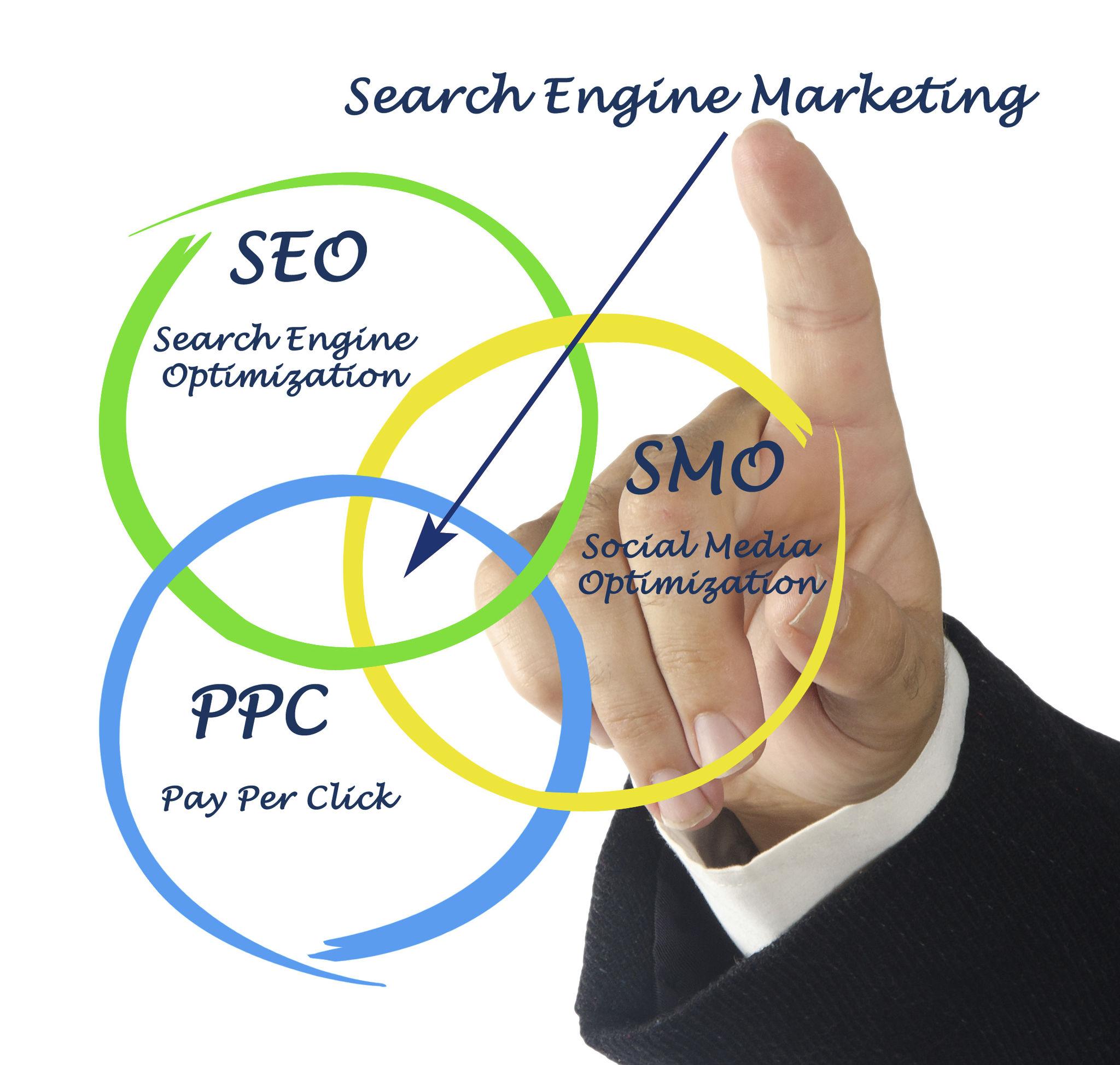
If your customers can’t find you online, your business is practically invisible no matter how great your product or service is. That’s the uncomfortable truth every business owner eventually faces. The good news? Search marketing is your solution.
Search marketing is the umbrella discipline that helps your brand appear when people actively look for what you offer. It’s not guesswork. It’s not luck. It’s a structured, data-driven approach that combines the long-game power of SEO (Search Engine Optimization) with the instant-results precision of SEM (Search Engine Marketing through paid ads). Done right, it doesn’t just increase website traffic it fills your pipeline with qualified leads who are ready to act.
What Is Search Marketing? (And Why It Matters More Than Ever)
Search marketing refers to every strategy and tactic that helps your brand gain visibility on search engines like Google, Bing, and increasingly, AI-powered platforms like ChatGPT Search and Google’s SGE (Search Generative Experience).
At its core, search marketing has two main pillars:
SEO (Search Engine Optimization) – the practice of optimising your website, content, and technical structure so that search engines rank you organically (without paying for placement).
SEM (Search Engine Marketing / Paid Search) – the practice of running paid advertisements, primarily through Google Ads or Microsoft Ads, that appear at the top of search results when users search specific keywords.
Here’s why search marketing deserves your full attention right now:
- Google processes over 8.5 billion searches per day
- 68% of all online experiences begin with a search engine
- 75% of users never scroll past the first page of search results
- Businesses that rank #1 organically capture an average click-through rate of 27.6%
- Paid search advertising delivers an average ROI of 200% ($2 for every $1 spent)
The message is clear: if you’re not investing in search marketing, you’re handing your market share to competitors who are.
The SEO Strategy: Building Long-Term Traffic That Compounds
SEO is not a quick fix. It’s a long-term investment that, when executed well, becomes one of the most powerful and cost-efficient sources of traffic and leads your business can have. Here’s how to build a strong SEO foundation.
1. Keyword Research: The Foundation of Everything
Every effective SEO strategy starts with understanding what your audience is searching for. Keyword research is not just about finding high-volume terms it’s about understanding search intent.
There are four types of search intent you must plan for:
- Informational -What is search marketing?(user wants to learn)
- Navigational -Digital Happiness agency(user wants a specific brand)
- Commercial -best search marketing agency in India (user is comparing options)
- Transactional -hire SEO agency Ludhiana(user is ready to act)
Your content must address all four stages of this journey. For a business like yours, targeting keywords like search marketing,SEO and SEM strategy,increase website traffic, and lead generation marketing across different content types creates a comprehensive content map that attracts users at every stage of the funnel.
2. On-Page SEO: Optimising What’s Already Under Your Control
On-page SEO is the practice of optimising individual pages on your website to rank higher and attract more relevant traffic. Here’s what every well-optimised page needs:
Title Tags & Meta Descriptions Your title tag is the single most important on-page SEO element. It should include your primary keyword naturally within the first 60 characters. Your meta description (under 160 characters) should summarise the page compellingly and include a call-to-action.
Header Tags (H1, H2, H3) Use your primary keyword in your H1 (there should be only one per page). Use related secondary keywords like “lead generation marketing” and “SEO and SEM strategy” in your H2s and H3s naturally.
Content Quality & Length Google’s algorithms have evolved to prioritise depth, authority, and helpfulness. For competitive keywords in the search marketing space, aim for content of 2,000–4,000 words that genuinely answers user questions better than anyone else. Thin, shallow content no longer ranks.
Image Optimisation Compress images for faster load times. Add descriptive alt text using relevant keywords it helps both accessibility and SEO.
3. Technical SEO: The Engine Under the Hood
You can have great content and still rank poorly if your website’s technical health is weak. Technical SEO ensures search engines can crawl, index, and understand your site properly.
Key technical SEO priorities:
- Page Speed: Google uses Core Web Vitals as a ranking factor. Your page should load in under 2.5 seconds. Use Google PageSpeed Insights to identify issues.
- Mobile-First Indexing: Google indexes the mobile version of your site first. Ensure your site is fully responsive across all devices.
- HTTPS Security: If you’re not on HTTPS, you’re losing both rankings and user trust. This is non-negotiable.
- Crawlability: Your robots.txt and sitemap must be properly configured. Search engines should be able to discover and index every important page.
- Structured Data (Schema Markup): Adding schema helps Google understand your content better and can unlock rich results (like star ratings, FAQs, or event listings) in the SERPs dramatically improving click-through rates.
4. Off-Page SEO: Building Authority Beyond Your Website
Off-page SEO primarily means link building -earning links from other websites that point to yours. Each quality backlink is like a vote of confidence in the eyes of search engines.
Effective link-building tactics:
- Guest Posting: Write valuable content for reputable industry blogs and include a link back to your site
- Digital PR: Get quoted as an expert in online publications and news articles
- Broken Link Building: Find broken links on authoritative sites and offer your content as a replacement
- HARO (Help a Reporter Out): Answer journalist queries and get featured in media with backlinks
- Local Citations: For location-specific businesses, ensure your NAP (Name, Address, Phone) is consistent across Google Business Profile, Justdial, Sulekha, and other Indian local directories
Quality always beats quantity in link building. One link from an authoritative domain in your industry is worth more than fifty links from low-quality directories.
The SEM Strategy: Generating Leads from Day One
While SEO builds your long-term foundation, paid search advertising (SEM) lets you appear at the top of Google immediately before your organic rankings develop. This is especially valuable for new pages, product launches, seasonal promotions, or highly competitive keywords where organic ranking takes time.
1. Understanding the Google Ads Auction
Every time someone searches a query related to your business, Google runs an instant auction among all advertisers targeting that keyword. But the winner isn’t always the one who bids the most Google uses a metric called Ad Rank which combines:
- Your bid (how much you’re willing to pay per click)
- Your Quality Score (a 1–10 rating based on ad relevance, expected CTR, and landing page experience)
- Expected impact of ad assets (extensions, sitelinks, callouts)
The implication? A highly relevant, well-structured campaign can outrank a competitor with a bigger budget. Smart marketers win on strategy, not just spend.
2. Keyword Match Types: Getting Targeting Right
One of the most common and costly SEM mistakes is ignoring keyword match types. Google Ads offers three:
- Broad Match – Ads show for searches that are loosely related to your keyword. High reach, lower precision.
- Phrase Match -Ads show for searches that include the meaning of your keyword phrase. Good balance.
- Exact Match -Ads show only for searches that match your keyword closely. Highest precision, lowest volume.
For lead generation marketing, start with phrase and exact match keywords to control spend. Add negative keywords (terms you don’t want to trigger your ads) aggressively to avoid wasting budget on irrelevant clicks.
3. Ad Copy That Actually Converts
Your ad has milliseconds to make an impression. Great ad copy:
- Speaks directly to the user’s intent (“Looking to Increase Website Traffic? Let’s Talk.”)
- Includes your primary keyword in the headline (improves Quality Score)
- Highlights a unique value proposition -what makes Digital Happiness different?
- Has a clear, urgent call-to-action (“Get a Free SEO Audit Today” beats “Learn More”)
- Uses ad extensions – sitelinks, callouts, call extensions, and structured snippets give your ad more real estate and improve CTR
4. Landing Pages: Where Leads Are Won or Lost
Sending paid traffic to your homepage is like pouring water into a leaky bucket. Every ad campaign needs a dedicated landing page built around a single, focused goal.
A high-converting landing page for a search marketing service should include:
- A headline that mirrors the ad’s promise
- A clear value proposition in the first 5 seconds
- Social proof (client logos, testimonials, case study results)
- A simple, frictionless form or CTA button
- Fast load time (under 3 seconds on mobile)
- Trust signals (certifications, awards, media mentions)
A/B test everything headlines, CTAs, form length, imagery. Marginal improvements in conversion rate have an outsized impact on your cost per lead.
5. Smart Bidding & AI-Powered Campaign Management
In 2026, Google’s AI-powered Smart Bidding strategies have matured significantly. Options like Target CPA (Cost Per Acquisition) and Maximise Conversions use machine learning to automatically adjust bids based on signals like device, location, time of day, and user behaviour.
These work best when:
- Your conversion tracking is set up correctly
- You have at least 30–50 conversions per month in the campaign
- You give the algorithm 2–4 weeks to learn before making major changes
Don’t set and forget even with Smart Bidding, human oversight on search term reports, ad copy testing, and audience layering is essential.
Integrating SEO and SEM: The Power of a Unified Strategy
The biggest mistake businesses make in search marketing is treating SEO and SEM as separate departments with separate budgets and separate goals. The most effective search marketing agencies and the brands that consistently dominate search results – run these disciplines as an integrated engine.
Here’s how SEO and SEM amplify each other:
SEM data informs SEO content strategy Your paid search campaigns give you real data on which keywords drive conversions (not just clicks). Use this data to prioritise which organic content you create next. If “search marketing agency India” is converting well in ads, it’s worth investing in an organic content strategy for that keyword.
SEO reduces your SEM cost A well-optimised landing page gets a higher Quality Score, which means you pay less per click for the same position. Investing in your on-page SEO directly reduces your paid advertising costs.
Double the SERP real estate When you rank organically AND run paid ads for the same keyword, you own more of the search results page. Studies show that combined organic + paid presence increases total clicks by 25–50% compared to either channel alone.
Retargeting bridges organic visitors Use Google’s audience tools to retarget users who found you through organic search but didn’t convert. You’re spending paid budget on people who’ve already shown interest a much warmer audience.
Lead Generation Marketing: Turning Traffic Into Revenue
Driving traffic is only half the battle. The real goal of search marketing is lead generation converting visitors into prospects who have raised their hand and said “I’m interested.”
Build a Lead Generation Funnel
Your search marketing strategy should map to a clearly defined funnel:
Top of Funnel (TOFU) – Awareness Blog content targeting informational keywords (“What is search marketing?”), educational guides, and free resources. Goal: attract a broad audience and introduce your brand.
Middle of Funnel (MOFU) – Consideration Comparison content (“SEO vs SEM: Which is Right for Your Business?”), case studies, webinars, and service explainers. Goal: build trust and help prospects evaluate your solution.
Bottom of Funnel (BOFU) – Decision Landing pages targeting transactional keywords (“best SEO agency India,” “search marketing services for small businesses”), free consultations, audits, and demo requests. Goal: convert.
Lead Magnets That Work in 2026
Offer something genuinely valuable in exchange for an email or contact detail:
- Free SEO Audit for your website
- A downloadable “Keyword Research Checklist”
- A personalised SEM budget calculator
- A “Local SEO Scorecard” for Indian small businesses
- A 30-minute strategy consultation
Pair these with targeted paid search campaigns and you have a predictable, scalable lead generation system.
Measuring What Matters: Key Search Marketing Metrics
You can’t improve what you don’t measure. Here are the metrics that actually matter for search marketing:
For SEO:
- Organic sessions (Google Analytics)
- Keyword rankings (Ahrefs, SEMrush)
- Click-Through Rate from organic search (Google Search Console)
- Domain Authority / Domain Rating
- Backlinks earned
- Bounce rate and average time on page
- Organic leads / conversions
For SEM:
- Impressions and Click-Through Rate (CTR)
- Cost Per Click (CPC)
- Conversion Rate (CVR)
- Cost Per Lead (CPL)
- Cost Per Acquisition (CPA)
- Return on Ad Spend (ROAS)
- Quality Score
The north star metric? Cost per qualified lead how much are you spending across both organic and paid efforts to bring in one legitimate prospect? When your search marketing is truly optimised, this number drops over time as organic traffic grows and paid campaigns become more efficient.
Common Search Marketing Mistakes (And How to Avoid Them)
Even experienced marketers fall into these traps:
Mistake 1: Targeting keywords without considering intent High-volume keywords that attract the wrong audience are a waste. Always ask: “When someone searches this, what do they really want?”
Mistake 2: Ignoring mobile users In India, over 75% of web traffic comes from mobile devices. If your site isn’t mobile-optimised, you’re failing the majority of your audience and Google’s ranking algorithm.
Mistake 3: Not setting up conversion tracking before running ads If you can’t track what’s converting, you can’t optimise. Set up Google Ads conversion tracking and GA4 goals before spending a single rupee on paid search.
Mistake 4: Creating content for search engines, not humans Keyword stuffing is dead. Google’s helpful content updates have made it clear: content that genuinely answers user questions and provides real value will rank. Content written purely for algorithms will not.
Mistake 5: Treating search marketing as a one-time project SEO and SEM require continuous investment and iteration. The brands winning in search aren’t doing it once they’re publishing, optimising, testing, and refining every single month.
The Future of Search Marketing: What’s Changing in 2026
Search marketing is not static. Here are the trends reshaping the landscape right now:
AI-Powered Search (SGE & ChatGPT) Google’s Search Generative Experience is changing how results are displayed. Optimising for featured snippets and structured data has become more critical than ever, as AI summaries often pull from these formats.
Voice Search Optimisation With the growth of voice assistants, conversational and question-based queries are increasing. Optimising for natural language and FAQ-style content positions you for this shift.
Zero-Click Searches More search queries are being answered directly on the SERP (via featured snippets, knowledge panels, or AI overviews) without users clicking through. This makes brand visibility and authority even more important even without the click.
First-Party Data & Privacy Changes As third-party cookies fade, search marketers must invest in first-party data collection email lists, CRM data, customer surveys to power more effective targeting.
Video & Visual Search Integration Google is increasingly incorporating video results and visual search capabilities. Creating video content that supports your written content is now a meaningful ranking signal.
Why Partner With Digital Happiness for Your Search Marketing?
At Digital Happiness, we don’t believe in cookie-cutter digital marketing. We build bespoke SEO and SEM strategies that are rooted in data, tailored to your industry, and laser-focused on one outcome: generating qualified leads that grow your business.
We combine the strategic depth of a specialised agency with the agility of a team that genuinely cares about your results. Whether you need a technical SEO audit, a Google Ads campaign built from the ground up, or a full-funnel search marketing strategy, we’ve got you covered.
Here’s what working with Digital Happiness looks like:
- Deep-dive keyword and competitor research
- Technical SEO audit and implementation
- Content strategy aligned with your buyer’s journey
- Google Ads campaigns built for quality leads, not just clicks
- Monthly reporting tied to your revenue goals not vanity metrics
- Transparent communication and real partnership
Final Thoughts
Search marketing is not magic. It’s a disciplined, data-driven practice that rewards consistency, creativity, and strategic thinking. When SEO and SEM work together supported by strong content, well-designed landing pages, and rigorous measurement the result is a predictable engine that drives traffic, generates leads, and grows revenue month after month.The question is not whether search marketing works. The question is whether you’re doing it with enough focus, expertise, and consistency to see results.
If you’re ready to stop leaving leads on the table and start owning your space in search results, Digital Happiness is ready to help
Digital Happiness is a full-service digital marketing agency helping businesses across India grow their online presence through smart, results-driven search marketing strategies. Specialising in SEO, SEM, lead generation marketing, and content strategy.