If your business sells services, consulting, law, marketing, healthcare, design, or finance, your website isn’t a brochure. It is your 1 sales rep. And in 2026, the only way that rep gets in front of the right people at the right moment is through smart, sustained SEO services. This guide gives you the full playbook. 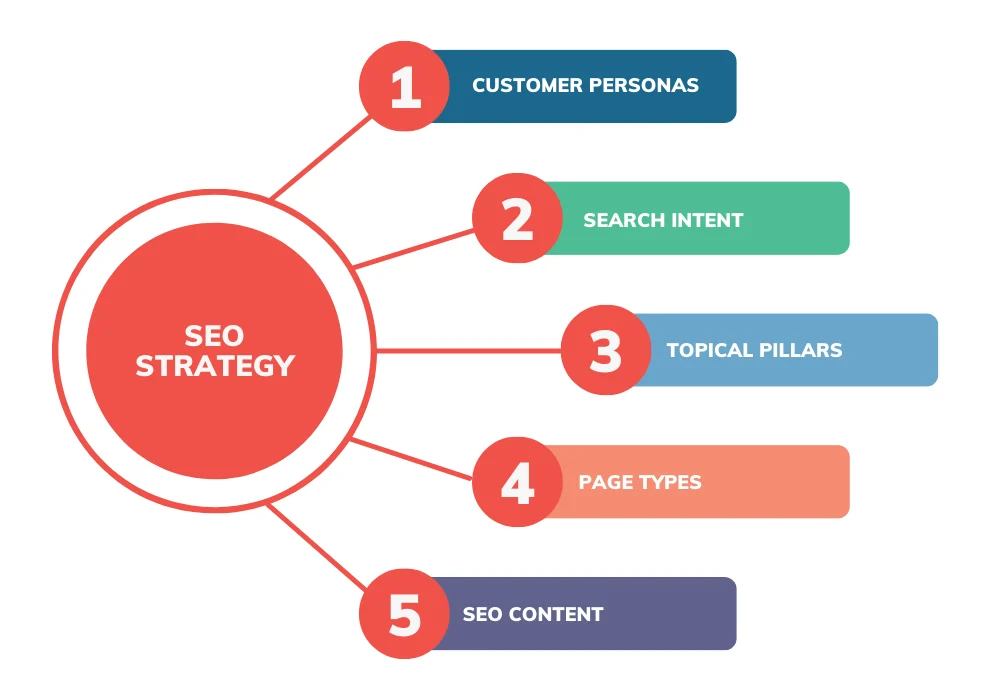
Why SEO is Non-Negotiable for Service Businesses in 2026
Service businesses live and die by trust. A plumber, an accountant, a digital agency – none of them survive without credibility. And in 2026, credibility starts with Google. When a potential client types “best marketing agency near me” or “hire SEO consultant,” they aren’t scrolling to page 3. The top 3 results take over 54% of all clicks.
93% of online experiences begin with a search engine
75% of users never scroll past the first page of results
8× more trust placed in organic results vs paid ads
14.6% average close rate from SEO leads (vs 1.7% outbound)
The Core Insight Service businesses don’t have products to photograph or add-to-cart buttons. Their entire conversion funnel depends on being found, appearing credible, and making it easy for a visitor to take the next step. SEO services are the engine behind all three.
Unlike e-commerce, service businesses face a unique challenge: they are selling intangible outcomes. SEO bridges that trust gap by putting your expertise front and centre before a prospect ever picks up the phone. For an in-depth look at how Google’s algorithm has evolved in 2026, Google’s official SEO Starter Guide is an essential reference point.
Building a Keyword Framework for Service Business SEO
Service business SEO starts with understanding search intent. Your potential clients aren’t searching for your brand name – they’re searching for their problem. Your job is to be the answer.
The Three-Layer Keyword Model
- Core Service Keywords (High Intent)These are your primary targets. Example: SEO services, digital marketing agency, hire SEO consultant. High competition, high reward.
- Qualifier + Service Keywords (Medium Intent) Layer on specifics: professional services SEO, SEO for law firms, service business SEO strategy. These convert exceptionally well.
- Problem/Pain Keywords (Top of Funnel) What does your client Google before they know they need you? “why my website isn’t getting traffic,” “how to get more clients online.” This is where content marketing shines.
Pro tip: For every primary keyword like SEO services, identify 5–8 long-tail variations. “Affordable SEO services for small businesses,” “monthly SEO services for consultants,” and “best SEO services 2026” collectively drive more qualified traffic than a single broad term.
Tools to Use in 2026
While tools like Ahrefs and Google Search Console remain industry standards, AI-integrated tools like Search Atlas (which Digital Happiness actively uses) now allow you to map intent clusters automatically – a game-changer for service business SEO planning.
Not Sure Which Keywords to Target for Service Businesses
Get a free SEO audit from Digital Happiness – we’ll identify your highest-value keyword opportunities and show you exactly where you’re losing rankings. Claim Your Free SEO Audit View Our SEO Services
Local SEO Services: Win Your Geographic Market-Service Busines
For the majority of service businesses – accountants, clinics, agencies, contractors – geography is everything. Local SEO services ensure that when someone in your city searches for what you do, your business shows up before anyone else’s.
The Local SEO Trifecta
- Google Business Profile (GBP) Optimization– Complete every field, choose precise categories, upload real photos monthly, and respond to every review. GBP is the most direct lever for local search visibility.
- NAP Consistency– Your Name, Address, and Phone number must be identical across your website, GBP, social profiles, and every directory listing. Inconsistency kills local rankings.
- Local Citation Building– Get listed on relevant directories: Justdial, Sulekha, India MART (for Indian markets), plus globally on Yelp, Clutch, and industry-specific platforms.
- Localised Content– Write blog posts and service pages that reference local landmarks, events, or issues. “Best SEO agency in Chandigarh” outperforms “best SEO agency” for local intent.
- Review Velocity– Actively request reviews from happy clients. Quantity, recency, and response rate all feed into Google’s local ranking algorithm.
Local Pack = Local Gold. The “Local Pack” (the map + 3 business results that appear at the top of local searches) generates 44% of all clicks for local search queries. Winning a Local Pack position for your primary service can be more valuable than ranking 1 organically.
Schema Markup for Local Businesses- Service Businesses
Implement the Local Business schema on your website. This structured data tells Google exactly what you do, where you operate, what your hours are, and how customers can contact you – directly increasing your chances of rich snippet appearances and Local Pack inclusion. According to Schema.org, Local Business markup is one of the highest-impact structured data types for service businesses.
On-Page SEO for Professional Services Businesses
Professional services SEO demands a higher standard of on-page execution. Your clients are sophisticated – they will read your content, judge your authority, and benchmark you against competitors before making a single enquiry.
Service Page Architecture-Service Businesses
Every service you offer deserves its own dedicated landing page. Not a paragraph on your homepage – a full, optimised page targeting a specific keyword cluster.
- One Page, One Primary KeywordYour “SEO Services” page targets SEO services. Your “Local SEO” page targets local SEO services. Never split focus.
- Title Tag FormulaPrimary Keyword + Differentiator + Brand. E.g., “SEO Services That Drive Revenue | Digital Happiness.” Keep it under 60 characters.
- H1, H2, H3 HierarchyUse your primary keyword in the H1. Deploy secondary keywords (service business SEO, professional services SEO) in H2s naturally.
- First 100 Words Matter MostInclude your primary keyword within the opening paragraph. Google weights early placement heavily in 2026’s ranking signals.
- Internal LinkingLink from your blog posts back to your service pages using keyword-rich anchor text. This passes PageRank and helps Google understand your site structure.
The E-E-A-T Imperative for Professional Services Businesses
Google’s E-E-A-T framework (Experience, Expertise, Authoritativeness, Trustworthiness) was originally critical for YMYL (Your Money or Your Life) categories like finance and health. In 2026, it applies to all professional services. To strengthen EE-A-T:
- Publish content authored by named, credentialed team members – not anonymous “admin.”
- Display case studies with real, measurable results (traffic percentages, ranking improvements).
- Earn backlinks from industry publications, directories, and PR mentions.
- Keep your “About,” “Team,” and contact information prominently accessible.
- Display client logos, testimonials, and third-party review platform ratings.
Technical SEO: The Foundation Nobody Sees (But Google Does)-Service Businesses
You can write the most compelling content in your industry, but if your website has technical problems, Google won’t rank it. Technical SEO is the non-negotiable foundation.
| Technical Factor | Why It Matters in 2026 | Impact Level |
|---|---|---|
| Core Web Vitals | LCP, CLS, INP are confirmed ranking signals. Slow pages lose rankings. | 🔴 Critical |
| Mobile-First Indexing | Google indexes your mobile version. Non-mobile-optimised = invisible. | 🔴 Critical |
| HTTPS | HTTP sites are flagged as “Not Secure.” Instant trust killer. | 🔴 Critical |
| Crawlability | Robots.txt errors, broken internal links, and orphan pages waste crawl budget. | 🟡 High |
| Structured Data | Schema markup enables rich results and enhances SERP presence. | 🟡 High |
| Page Speed | Every 1-second delay reduces conversions by ~7%. Google notices. | 🟡 High |
Run your site through Google PageSpeed Insights right now. A score below 70 on mobile is a significant ranking disadvantage. Most service business websites score between 40–60. There’s your opportunity.
Content Marketing for Service Business SEO
In 2026, content is no longer just “blogging.” It is the systematic creation of assets that capture demand at every stage of your potential client’s decision-making journey.
The Content Funnel for Service Businesses
- Awareness Stage – Educational Content “What is SEO and why does it matter for my business?” “How long does SEO take?” These posts build brand awareness and start ranking for informational queries.
- Consideration Stage – Comparison & Guide Content “SEO vs PPC: What’s Right for Service Businesses?” “How to Choose an SEO Agency in 2026.” These capture prospects actively comparing options.
- Decision Stage – High-Intent Content “SEO Services Pricing Guide,” “What to Expect in Your First 90 Days of SEO.” These are conversion-optimised pages that speak to ready-to-buy clients.
- Retention Stage – Client Success Content Case studies, monthly SEO report templates, and “how to track your SEO results” guides. These reduce churn and generate referrals.
Content Cadence Recommendation: For service businesses with a lean team: 2 high-quality blog posts per month (1,500+ words each), 1 updated service page per quarter, and 1 new case study every 60 days. Consistency beats volume. A 2-year-old blog with 24 excellent posts outranks a 3-month-old blog with 300 thin ones.
Link Building for Service Businesses
Backlinks remain one of the top 3 ranking factors in 2026. For service businesses, the most effective link-building strategies are those that naturally align with how you already operate.
- Digital PR– Pitch expert commentary to industry publications, local news outlets, and business journals. A single mention in a high-authority publication can move your rankings noticeably.
- Guest Posting– Write for industry blogs and trade publications in your niche. Include a natural link back to your most relevant service page.
- Resource Page Links– Many industry associations, universities, and directories maintain “resource” pages. Getting listed on these earns authoritative, relevant links.
- Client & Partner Links– Ask your B2B clients and partners to link to your website from their vendor/partner pages. These convert well because of existing trust.
- Reclaim Unlinked Brand Mentions– Use tools like Ahrefs Content Explorer to find mentions of your brand that don’t link to you, then reach out for the link.
- HARO / Qwoted– Respond to journalists’ source requests. A single placement in a major outlet like Forbes or Business Insider can generate dozens of downstream links.
For a deep dive into white-hat link-building tactics for 2026, Moz’s Backlink Guide remains one of the most comprehensive resources available.
Ready to Dominate Your Service Niche?
Digital Happiness specialises in result-driven SEO for service businesses. From local SEO to enterprise-level strategies – let’s build your visibility together. Book a Strategy Call, Get Free Audit
AI, SGE, and the Future of Professional Services SEO-Service Businesses
Google’s Search Generative Experience (SGE) and AI Overviews have fundamentally changed how results are displayed in 2026. Service businesses need to adapt – or lose visibility to those who do.
How to Optimise for AI-Powered Search
- Answer Questions Directly– AI Overviews pull from content that directly answers the searcher’s question. Use FAQ sections and concise, declarative sentences in your content.
- Structured Data is More Important Than Ever– Proper schema markup helps Google’s AI understand and cite your content as a source in generative responses.
- Build Topical Authority– Cover your service area deeply. A business that has 40 interlinked pieces of content about “SEO for service businesses” will be seen as more authoritative than one with 2 posts.
- Focus on Brand Searches– When users see your brand in AI answers, they’ll Google you by name. Building brand recognition is now an SEO strategy.
- E-E-A-T Signals Are the AI Filter– AI systems are built to surface trusted, authoritative sources. Every EE-A-T investment you make is an investment in AI-era SEO.
The key insight for 2026: AI Overviews doesn’t eliminate organic clicks – they shift them to higher-intent queries. Users who get a basic answer from AI and still click through are much more qualified prospects. Optimise for depth, not just keyword density.
Measuring SEO Success: KPIs That Actually Matter-Service Businesses
Vanity metrics are the enemy of effective service business SEO. Ranking 1 means nothing if it doesn’t generate enquiries. Here’s what to track:
- Organic Traffic (Qualified)– Track not just total visits but the percentage coming from your target geographic areas and service categories. Use Google Analytics 4 + Search Console.
- Keyword Rankings for Money Keywords– Monitor your primary keywords (SEO services) and secondary keywords (local SEO services,professional services SEO) weekly.
- Conversion Rate from Organic– What percentage of organic visitors submit a contact form, book a call, or pick up the phone? This is your most important SEO metric.
- Leads Generated from Organic Search– Track how many qualified leads per month are attributable to SEO. Compare month-over-month and year-over-year.
- Domain Rating / Authority Score– A slow, consistent increase in domain authority reflects your link-building and content efforts compounding over time.
- Local Pack Appearances– Use Google Business Profile Insights to track how many times you appeared in local search results and how many actions (calls, direction requests, site visits) resulted.
Your 2026 Service Business SEO Roadmap: Where to Start
If you’ve made it to this point, you now have a more complete understanding of SEO services for service businesses than 90% of your competitors. The question is: what to do first?
- Month 1: Audit & FoundationTechnical SEO audit, keyword research, Google Business Profile optimisation, and competitor gap analysis.
- Month 2–3: On-Page & ContentOptimise all service pages, launch your content calendar, implement schema markup, and create 4–6 foundational blog posts.
- Month 4–6: Authority BuildingBegin link-building outreach, digital PR, and citation building. Consistently publish 2 posts per month.
- Month 7–12: Scale & RefineDouble down on what’s working. Add new service pages, target new keyword clusters, and track conversion improvements.
SEO is not a sprint. For service businesses, the compounding returns typically become very significant by months 6–9. The businesses dominating their local and national search results in late 2026 are the ones who started in early 2026.
Don’t wait for the perfect moment. Start now.
Let Digital Happiness Handle Your SEO for Service Businesses
We specialize in SEO services for service-based businesses. From local SEO to full-funnel organic strategy – we build visibility that converts. Start With a Free Audit →
Digital Happiness TeamDigital Happiness is a full-service digital marketing agency specialising in SEO, content strategy, and growth marketing for service-based businesses. Visit our website →