
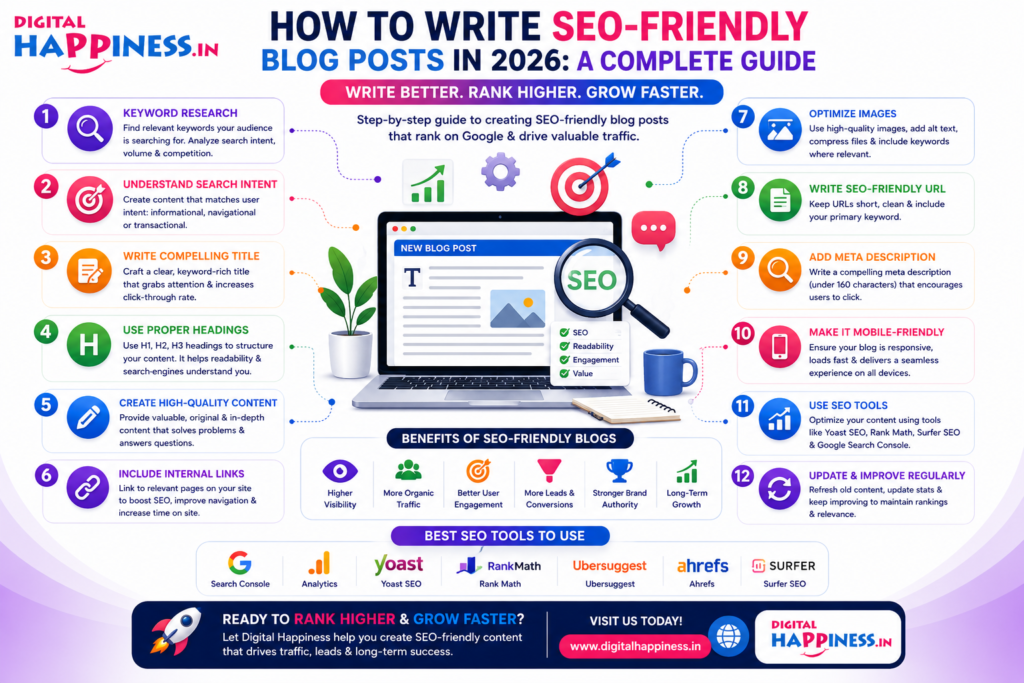
Creating content is easy—but creating SEO-friendly blog posts that rank on Google and drive traffic is where the real challenge lies. In 2026, search engines are smarter, competition is higher, and user expectations are evolving rapidly.
If you want your blog posts to rank higher, attract the right audience, and convert readers into customers, this guide will walk you through everything you need to know.
What is a SEO-Friendly Blog Post?
A SEO-friendly blog post is content that is optimized for search engines and users simultaneously. It follows best practices like keyword optimization, proper structure, internal linking, and user focused writing.
Key Goals:
- Rank higher on search engines
- Drive organic traffic
- Improve user engagement
- Generate leads and conversions
Step 1: Start with Keyword Research
Keyword research is the foundation of every successful blog post.
How to Do It:
- Identify your primary keyword (main focus term)
- Find secondary keywords (supporting terms)
- Analyze search intent (informational, transactional, etc.)
Example:
If you’re writing this blog, your primary keyword is:
SEO-friendly blog posts
Use tools like Google Keyword Planner, Ahrefs, or Ubersuggest to find relevant keywords.
Step 2: Understand Search Intent
Google ranks content based on user intent, not just keywords.
Types of Intent:
- Informational (learn something)
- Navigational (find a specific site)
- Transactional (buy or take action)
Make sure your content matches what users are actually looking for.
Step 3: Create a Powerful Title
Your title is the first thing users see.
Tips for Writing Titles:
- Include your primary keyword
- Keep it under 60 characters
- Add power words like Complete Guide, Best, Ultimate
Example:
How to Write SEO-Friendly Blog Posts in 2026 (Complete Guide)
Step 4: Write an Engaging Introduction
Your introduction should:
- Hook the reader
- Clearly explain what they’ll learn
- Include your primary keyword naturally
A strong intro reduces bounce rate and improves rankings.
Step 5: Use Proper Heading Structure
Structure makes your content easy to read and SEO-friendly.
Use:
- H1 for title
- H2 for main sections
- H3 for sub-points
This helps both users and search engines understand your content better.
Step 6: Optimize Content with Keywords
Keyword placement is crucial—but avoid overstuffing.
Best Practices:
- Use primary keyword in:
- Title
- First 100 words
- Headings
- Meta description
- Add secondary keywords naturally throughout
Step 7: Focus on High-Quality Content
Content quality is the #1 ranking factor in 2026.
Your Content Should:
- Provide real value
- Answer user questions
- Be easy to read
- Include actionable insights
For example, you can explore strategies in our guide on Complete SEO Guide for Beginners (2026 Edition): Rank Higher & Grow Faster to strengthen your SEO foundation.
Step 8: Add Internal Linking
Internal linking improves SEO and keeps users on your website longer.
Benefits:
- Boosts page authority
- Improves navigation
- Helps search engines crawl your site
Example Interlinking:
You can link to related blogs like:
- How to Measure SEO Results: KPIs Every Business Must Track
- The Real Cost of SEO Services in 2026
This creates a strong content network on your website.
Step 9: Optimize Images and Media
Visual content enhances user experience and SEO.
Tips:
- Use high-quality images
- Add alt text with keywords
- Compress images for faster loading
Step 10: Improve Readability
If your content is hard to read, users will leave.
Make It Readable:
- Use short paragraphs
- Add bullet points
- Use simple language
- Highlight important points
Step 11: Write a Strong Meta Description
Your meta description influences click-through rates.
Tips:
- Keep it under 160 characters
- Include your primary keyword
- Make it compelling
Step 12: Optimize for Mobile & Speed
Google prioritizes mobile first indexing.
Ensure:
- Responsive design
- Fast loading speed
- Smooth user experience
Step 13: Add a Clear Call-to-Action (CTA)
Every blog should guide users to take action.
Examples:
- Contact your team
- Request a service
- Subscribe to a newsletter
Step 14: Update Content Regularly
SEO is not a one time task.
Keep Content Fresh:
- Update outdated information
- Add new insights
- Improve keywords
Regular updates help maintain rankings.
Common Mistakes to Avoid
- Keyword stuffing
- Ignoring user intent
- Poor formatting
- No internal linking
- Low-quality content
Avoiding these mistakes can significantly improve your SEO performance.
Final Thoughts
Writing SEO-friendly blog posts in 2026 requires a balance of strategy, creativity, and optimization.
By following the steps above—keyword research, content quality, internal linking, and user experience—you can create blog posts that rank higher and drive real results.
Ready to Rank Higher with SEO-Optimized Content?
If you want expert help in creating high-performing, SEO-friendly blog posts that drive traffic and conversions, we’ve got you covered.
Visit us today: https://digitalhappiness.in/
At Digital Happiness, we specialize in SEO, content marketing, and digital growth strategies that help your business stand out online.
Let’s turn your content into a powerful growth engine!