PPC vs SEO: 7 Key Differences & Which Strategy Wins in 2026″ | Digital Happiness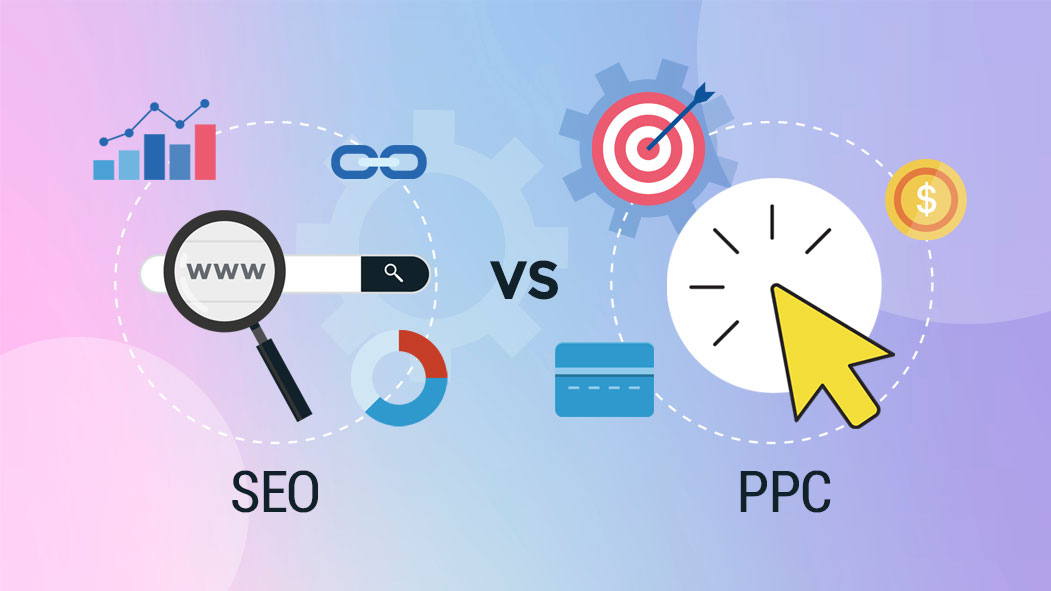
Every business owner faces this question sooner or later: should I invest inPPC vs SEO? Both promise more traffic, more leads, and better ROI but they work in completely different ways. This guide cuts through the noise and gives you a clear, data-backed answer for 2026.
If you’ve ever Googled how to get more customers online,you’ve already stumbled into this debate. On one side sits SEO the patient, compounding, long-game play that builds authority over time without paying for every click. On the other sits PPC the instant-on engine that puts you at the top of Google the moment you fund a campaign.As Search Engine Land has noted, framing this as a zero-sum choice is a fundamental mistake. In 2026, the question isn’t really PPC-SEO it’s understanding when each channel wins, and how they compound each other when used together.
- PPC -Pay-Per-Click:Speed & Control:Instant visibilityTraffic on day one. But traffic stops when spend stops.
- SEO- Search Engine Optimisation:Trust & Compounding Returns:Takes time to build. But compounds indefinitely and costs nothing per click.
- 2×Paid visitors are twice as likely to make a purchase as organic visitors
- 53%of all web traffic comes from organic search the single largest channel online
- $12.20average value returned per $1 spent on SEO over the long term, vs ~$2 for PPC
What Is PPC Advertising?
PPC stands for Pay-Per-Click an advertising model where businesses pay a fee each time a user clicks their ad. The most popular platform is Google Ads, which lets you bid on keywords and appear at the very top of search results, above organic listings and clearly marked with an Ad label.As Search Engine Land describes it, think of SEO and PPC as two sides of the same coin both are tools for search visibility, but the economic model, timeline, and compounding dynamics of each are completely different. PPC gives you position you pay for directly; SEO gives you position you earn over time.
In 2026, PPC campaigns are increasingly powered by AI Google’s Smart Bidding, Performance Max, and automated audience targeting mean campaigns can self-optimise in ways that were impossible just a few years ago.
How Google Ads Works
When a user searches for a keyword, Google runs a real-time auction. Your ad’s position depends on two factors: your bid (max cost-per-click) and your Quality Score a rating of how relevant your keyword, ad copy, and landing page are to the user’s search intent. A higher Quality Score means lower costs and better positions.
What Is SEO?
Search Engine Optimisation is the process of improving your website so it ranks higher in organic (non-paid) search results. It encompasses three broad pillars: technical SEO (how search engines crawl and index your site), on-page SEO (content, keywords, and structure), and off-page SEO (backlinks and authority signals).In 2026, SEO has become significantly more complex. Search Engine Journal notes that organic search now has to account for AI Overviews, Generative Engine Optimisation (GEO), and an increasingly zero-click search landscape. Great SEO in 2026 means optimising not just for Google’s ranking algorithm, but for the AI systems that scrape and summarise your content.
2026 SEO reality check: AI Overviews have reduced organic click-through rates on some queries. But organic search still accounts for 53% of all web traffic and SEO’s advantage is that every click is free once you’ve earned the ranking.
7 Key Benefits of PPC Advertising for Businesses
The benefits of PPC advertising for businesses are most powerful when speed, precision, and measurability matter most. Here’s what PPC does better than any other marketing channel:
1. Immediate Traffic & Visibility:Unlike SEO, where rankings can take months to build, a PPC campaign can place you at the top of Google the same day it launches. For new businesses or time-sensitive promotions, there’s no faster route to the first page.
2. Granular Audience Targeting:Google Ads lets you target by keyword, device, location, time of day, demographic, and even audience intent signals. You can reach exactly the right person at exactly the right moment something organic search can’t control.
3. Measurable ROI in Real Time:PPC offers unmatched transparency. You know exactly how much you spent, how many clicks you got, what your conversion rate is, and what your cost per lead is updated live. This makes budget decisions fast and evidence-based.
4. A/B Testing at Speed:PPC lets you test ad headlines, descriptions, offers, and landing pages within days. You don’t have to wait months for organic data you learn what resonates with your audience immediately and apply those insights across all your marketing.
5. Full Budget Control:You set the daily and monthly cap. Pause a campaign in seconds. Scale up when something works. Unlike SEO, where investment is in people and content, PPC spend is instantly adjustable based on performance and business conditions.
6. Powerful Remarketing:PPC platforms let you re-engage users who visited your site but didn’t convert showing them tailored ads as they browse other websites. Remarketing campaigns typically achieve significantly higher conversion rates than cold-audience campaigns.
7. Brand Protection & Competitive Defence:Bidding on your own brand name prevents competitors from stealing traffic when users search for you directly. It’s a low-cost insurance policy that ensures your brand is always the first result for your own name.
8. Bonus: AI-Powered Campaign Optimisation:In 2026, Google’s Smart Bidding uses machine learning to optimise bids in real time, considering hundreds of contextual signals per auction. AI has made PPC more efficient and more competitive than ever.
Key Benefits of SEO for Businesses
Where PPC wins on speed, SEO wins on long-term economics. Search Engine Journal identifies SEO as the channel that “builds structural consistency it requires patience, but the returns compound in a way paid advertising never can.
- Compounding, Long-Term ROI:Research estimates SEO delivers up to $12.20 in value per $1 spent over the long term. Once you rank, traffic is essentially free and a well-maintained page can hold its position for years.
- Trust & Credibility:Users trust organic results more than paid ads. Studies consistently show that organic listings attract higher quality engagement longer dwell times, lower bounce rates, and stronger brand recall.
- Higher Conversion Quality:SEO converts at an average of 14.6% significantly higher than most paid channels. Organic search captures users at a moment of genuine intent, making them inherently higher quality leads.
- AI Search Visibility:In 2026, strong SEO foundations also power your presence in AI Overviews, ChatGPT search, and Perplexity. Structured data, E-E-A-T, and technical health feed both traditional and AI-driven discovery.
PPC vs SEO: Direct Comparison
Let’s put the two strategies side by side across the metrics that matter most for business decision-making:
| Factor | PPC | SEO |
|---|---|---|
| Time to first results | Same day | 3–6+ months |
| Cost per click | £0.50–£20+ per click | £0 once ranked |
| Long-term ROI | Stops when spend stops | Compounds over time |
| Click-through rate | ~3.17% avg | ~37% for position #1 |
| Audience targeting | Highly granular | Intent-based only |
| Brand trust / credibility | Lower (labelled “Ad”) | Higher (organic) |
| A/B testing speed | Days | Weeks to months |
| Scalability | Tied to budget | Scales with authority |
| Algorithm risk | Low (you control bids) | Higher updates can impact rankings |
| AI search visibility | Emerging (ads in AI Overviews) | Core channel for AI discovery |
When Should You Use PPC vs SEO?
The honest answer is that most businesses should use both but the emphasis changes depending on where you are in your growth journey. Here’s a practical framework:
Choose PPC When…
- You’re a new business that needs leads now
- You’re launching a product or promotion with a deadline
- You operate in a highly competitive market where organic ranking takes years
- You want to test which keywords and messages convert before investing in SEO content
- You need precise targeting by location, device, or audience segment
- Your industry has high purchase intent and short buying cycles (e-commerce, SaaS trials, events)
Choose SEO When…
- You’re building a long-term, sustainable growth engine
- Your industry has high CPCs (legal, finance, insurance) where clicks are expensive
- You want to build brand authority and trust over time
- You publish valuable content that educates your audience
- You want to appear in AI search results and featured snippets
- You have a 6–12 month runway and want traffic that doesn’t stop when spend stops
The Smarter Play: Using PPC and SEO Together
The most important insight in the PPC vs SEO debate is this: they’re not rivals, they’re teammates. As Search Engine Land describes it, SEO builds presence and baseline visibility. PPC secures position and drives broad awareness.Each layer feeds the other.Search Engine Journal highlights a practical advantage that’s often overlooked: PPC generates keyword and conversion data that SEO can act on immediately. You don’t have to wait six months for organic data to learn which keywords convert your paid campaigns tell you within days.
- 1 Use PPC data to prioritise SEO contentRun PPC campaigns first on competitive keywords. Identify which search terms produce the best conversion rates. Then invest your SEO content budget into those proven terms eliminating the guesswork that wastes months of effort.
- 2 Run PPC on gaps in your organic coverageIdentify high-value keywords where you don’t yet rank organically and bid on them with PPC. As your SEO improves and organic rankings for those terms grow, gradually reduce your PPC spend on them reinvesting budget into new gaps.
- 3 Promote new content with PPCNew content faces a “cold start” problem it can take months to rank organically. Use paid promotion to drive early traffic to high-value pages. That initial exposure generates the engagement signals that support faster organic ranking.
- 4 Dominate the full SERP on priority keywordsFor your most commercially important keywords, appear in both paid and organic positions simultaneously. Double SERP presence increases brand credibility and click-through rates and protects your visibility if one channel is temporarily disrupted.
- 5 Use PPC for remarketing to SEO visitorsSomeone who found you through an organic search and visited your blog is a warm lead. Retarget them with PPC ads offering a demo, consultation, or offer. This conversion loop is one of the highest-ROI moves in digital marketing.
The Verdict: Which Is Better PPC or SEO?
Neither. PPC wins on speed and precision. SEO wins on long-term economics and trust. The businesses that outperform in 2026 are the ones that stop treating this as a binary choice and instead build an integrated strategy using PPC for immediate demand capture and SEO for sustainable, compounding authority. If you have to choose just one due to budget constraints: if you need leads within 30 days, start with PPC. If you’re investing for the next 12–24 months, prioritise SEO. Ideally, do both.
Not Sure Where to Start?
The team at Digital Happiness can audit your current visibility, map out the right PPC vs SEO balance for your business, and build a strategy that drives real growth not just traffic.Get a Free Strategy Session →
Digital Happiness Team:We’re a digital marketing agency helping brands grow through data-driven SEO, PPC, and content strategy. Visit us at digitalhappiness.in.
© 2026 Digital Happiness · All rights reserved · PPC vs SEO Strategy Guide